In the 18th century, William Blackstone wrote the seminal “Commentaries on the Laws of England,” which contained one of the foundational definitions of property: “that sole and despotic dominion which one man claims and exercises over the external things of the world, in total exclusion of the right of any other individual in the universe.” more
Jason Klamm stopped my office to interview me for his Comedy on Vinyl podcast, where I talked about the first comedy album I ever loved: Allan Sherman’s My Son, the Nut. more
I’m the “Honourary Steward” for this year’s Shuttleworth Fellowship, this being a valuable and prestigious prize given to people who are undertaking to make the world a better, more open place (“social innovators who are helping to change the world for the better and could benefit from a social investment model with a difference”). more
I did an interview with the Changelog podcast (MP3) about my upcoming talk at the O’Reilly Open Source conference in London, explaining how it is that the free and open web became so closed and unfree, but free and open software stayed so very free, and came to dominate the software landscape.
Last month, I filed comments with the Federal Trade Commission on behalf of Electronic Frontier Foundation, 22 of EFF’s supporters, and a diverse coalition of rightsholders, public interest groups, and retailers, documenting the ways that ordinary Americans come to harm when they buy products without realizing that these goods have been encumbered with DRM, and asking the FTC to investigate fair labeling for products that come with sneaky technological shackles. more
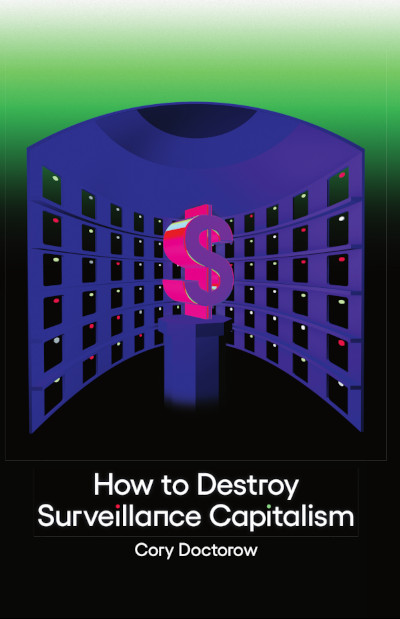
In my latest Locus column, The Privacy Wars Are About to Get A Whole Lot Worse, I describe the history of the privacy wars to date, and the way that the fiction of “notice and consent” has provided cover for a reckless, deadly form of viral surveillance capitalism. more
On this just-released episode of the O’Reilly Radar podcast (MP3), I talk about EFF’s lawsuit against the US government to invalidate Section 1201 of the DMCA, which will make it legal to break DRM in order to fix security vulnerabilities in the Internet of Things devices that, today, are almost invariable insecure, and are also designed to be as privacy-invading as possible (to create “monetizable” data-streams) — a brutal combo. more