I was lucky enough to be invited to submit a piece to Ian Bogost’s Atlantic series on the future of cities (previously: James Bridle, Bruce Sterling, Molly Sauter, Adam Greenfield); I told Ian I wanted to build on my 2017 Locus column about using networks to allow us to coordinate our work and play in a way that maximized our freedom, so that we could work outdoors on nice days, or commute when the traffic was light, or just throw an impromptu block party when the neighborhood needed a break. more
I was one of the interview subjects on an episode of BBC’s Tomorrow’s World called Do We Need a New Internet? (MP3); it’s a fascinating documentary, including some very thoughtful commentary from Edward Snowden.
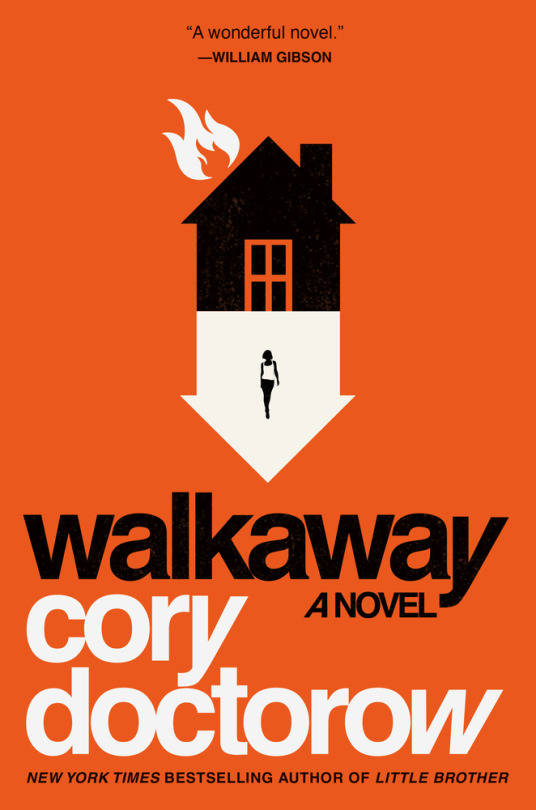
I’m about to embark on a tour of Australia and New Zealand to support my novel Walkaway, with stops in Perth, Melbourne, Sydney, Adelaide, and Wellington! I really hope you’ll come out and say hello! more
If you were a voting member of the World Science Fiction Convention in 2017, or are registered as a voting member for the upcoming conventions in 2018 or 2019, you are eligible to nominate for the Hugo Awards; the Locus List is a great way to jog your memory about your favorite works from last year — and may I humbly remind you that my novel Walkaway is eligible for your nomination?
Every year, Locus Magazine’s panel of editors reviews the entire field of science fiction and fantasy and produces its Recommended Reading List; the 2017 list is now out, and I’m proud to say that it features my novel Walkaway, in excellent company with dozens of other works I enjoyed in the past year. more
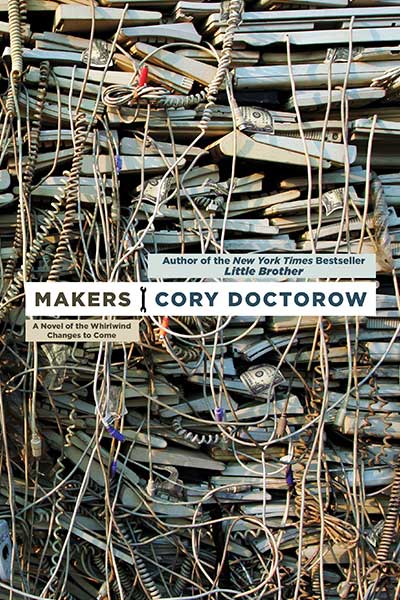
I’m appearing at UCSD on February 9, with a talk called “Scarcity, Abundance and the Finite Planet: Nothing Exceeds Like Excess,” in which I’ll discuss the potentials for scarcity and abundance — and bright-green vs austere-green futurism — drawing on my novels Walkaway, Makers and Down and Out in the Magic Kingdom. more
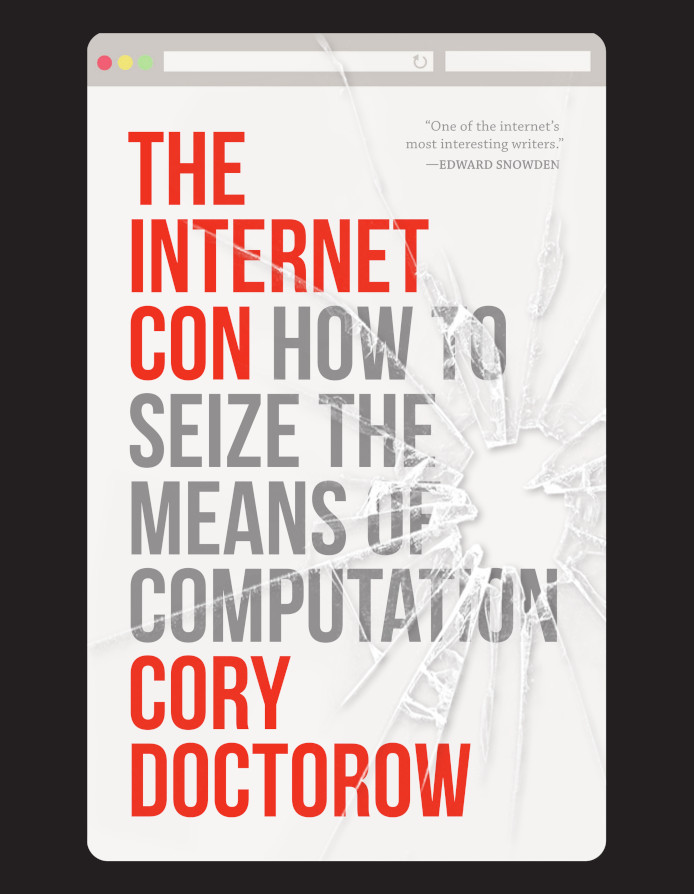
“The Internet’s broken and that’s bad news, because everything we do today involves the Internet and everything we’ll do tomorrow will require it. But governments and corporations see the net, variously, as a perfect surveillance tool, a perfect pornography distribution tool, or a perfect video on demand tool—not as the nervous system of the 21st century. Time’s running out. Architecture is politics. The changes we’re making to the net today will prefigure the future our children and their children will thrive in—or suffer under.”