/ / Little Brother, News


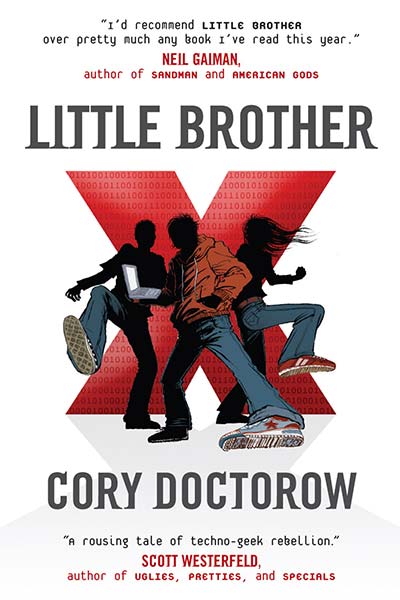
Samlaget, the Norwegian publisher for Little Brother, have released the full text of the book as a downloadable PDF. Samlaget have been incredibly forward-looking and a delight to work with. They brought me to Norway to participate in a debate on the future of copyright law at the Litteraturhuset, and my translator, editor, and publicist were all excited by the possibilities opened up by free digital distribution as a means to sell print books.

I often get asked why the foreign editions of my books aren’t available as a free download and the answer is simple: I rarely have any direct contact with my non-English publishers, let alone the kind of close working relationship that has enabled me to sell my UK and US publishers on the idea. But every now and again, a publisher will be excited enough about this to opt to put materials online off their own bat, and this is always wonderful for me. Samlaget is one of those publishers; Ragnfrid, my editor there, was the first non-English-language editor to buy the rights to Little Brother, right after it was published in English (her husband downloaded a free copy from my site, and shoved it into her hands!).


Cory Doctorow Veslebror Ser Deg

/ / News


Samlaget, the Norwegian publisher for Little Brother, have released the full text of the book as a downloadable PDF. Samlaget have been incredibly forward-looking and a delight to work with. They brought me to Norway to participate in a debate on the future of copyright law at the Litteraturhuset, and my translator, editor, and publicist were all excited by the possibilities opened up by free digital distribution as a means to sell print books.

I often get asked why the foreign editions of my books aren’t available as a free download and the answer is simple: I rarely have any direct contact with my non-English publishers, let alone the kind of close working relationship that has enabled me to sell my UK and US publishers on the idea. But every now and again, a publisher will be excited enough about this to opt to put materials online off their own bat, and this is always wonderful for me. Samlaget is one of those publishers; Ragnfrid, my editor there, was the first non-English-language editor to buy the rights to Little Brother, right after it was published in English (her husband downloaded a free copy from my site, and shoved it into her hands!).


Cory Doctorow Veslebror Ser Deg

/ / News

The inaugural Reading and Democracy National Reading Summit is coming up in Toronto on Nov 12-13, and I’m coming to Toronto to speak at it. The plan is to “create a national reading strategy for Canada” — a noble goal.

The TD National Reading Summit will engage participants in crafting a blueprint for a reading Canada. Over two days, delegates will hear from an impressive line-up of speakers from across the country and around the world. Ana Maria Machado (Brazil), Ingrid Bon (Netherlands), Elisa Bonilla (Mexico), Richard C. Anderson (USA), Cory Doctorow (UK/Canada), Tom King (Canada), Charles Pascal (Canada), and others will explore what it means to be a reader in a democratic society and share their research and experience in developing reading promotion programs. Conference sessions will inspire delegates to collaborate and lay the groundwork for new provincial and federal programs that will ultimately foster a reading culture in Canada.

Becoming a reader is at the very heart of responsible citizenship

/ / News

Annalee Newitz from IO9 and I sat down for a chat over lunch at the WorldCon, and she’s published the transcript:

Novels are competing for attention with other media that can be peeled off from them. At the same time, novels are social objects and the web is social technology. My novels diffuse through the web in what tends to be a social context. I get new downloads because a bunch of Livejournal people are discussing it. The web makes it easier for people who love books to turn those books into part of their identities. That makes people buy books more. And it’s cheaper to make them, as well as easier to get direct compensation.

/ / News

My new Guardian column, “The BBC is encrypting its HD signal by the back door,” describes a petition from the BBC to Ofcom, the UK telecoms regulator, seeking permission to encrypt its broadcast signals, something it is prohibited from doing. The BBC proposal goes like this: Hollywood studios are blackmailing us and demanding this. But the encryption won’t be bad, since it’ll only affect a few programmes and only in small ways.

It’s simply not true. The BBC is being deliberately misleading and extremely naive here. Naive because it’s just not credible that the Hollywood studios and other rightsholders will boycott broadcast TV without encryption. They made exactly the same threat in the US, saying that without the Broadcast Flag, they’d stop licensing sport and movies to broadcast TV. There’s no Broadcast Flag in the US. The broadcasts of sports and new release movies go on.

Misleading because the BBC’s proposal turns over control of the design of TV receivers and recorders in the UK to an offshore consortium called DTLA, effectively turning it, not Ofcom, into the British regulator. DTLA and its guidelines will determine what you can do with your TV signals, not Parliament and copyright law. DTLA prohibits the use of open source drivers, which means that this will render obsolete all cards and other devices with that can be used with free/open software. It also prohibits unencrypted digital outputs, which means that you won’t be able to buy a converter box that sends a HD digital signal to your SD Freeview box, so you’ll have to throw out the old box.

Be sure to check out the comments where I’m debunking the BBC’s talking points directly.

Some background: licence-fee-paid television must be free to receive in the UK. Unlike cable and commercial satellite signals, free-to-air television is carried on public airwaves, which broadcasters are allowed to use for free. In return, broadcasters are expected to provide programming on those airwaves, for free. And not just free as in “free beer”, but also free as in “free speech.” The terms and conditions for free-to-air telly are “Do anything you want with this, provided it doesn’t violate copyright law.”

But big rightsholder groups – US movie studios, mostly – object to this. They’d prefer a “copyright-plus” regime, in which they get to invent a bunch of new copyrights for themselves, without the inconvenience of public debate or parliamentary lawmaking. The way they do this is by slapping restrictive licence agreements on their media, or rather licence “agreements,” in inverted commas. You don’t get to negotiate these “agreements,” they’re imposed on you, and are sometimes even invisible to you.

The BBC is encrypting its HD signal by the back door

/ / Little Brother, News

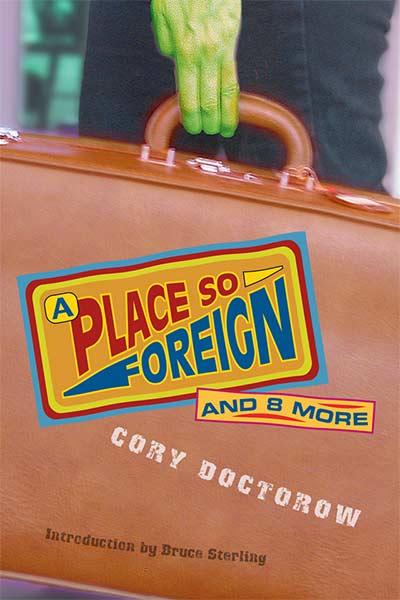
I’m delighted and honored to announced that my YA novel Little Brother has won the 2009 Sunburst YA award for best Canadian sf novel for kids. The Sunburst is named for Phyllis Gottleib’s first novel, my friend and the “mother of Canadian science fiction,” who died this year, so it’s especially poignant and significant to have won this in 2009. I also won the Sunburst in the adult category for my first short story collection, A Place So Foreign and Eight More.

My sincere thanks to the jury for making this book their choice, and to the donors who make the Sunburst possible.

/ / News

I’m delighted and honored to announced that my YA novel Little Brother has won the 2009 Sunburst YA award for best Canadian sf novel for kids. The Sunburst is named for Phyllis Gottleib’s first novel, my friend and the “mother of Canadian science fiction,” who died this year, so it’s especially poignant and significant to have won this in 2009. I also won the Sunburst in the adult category for my first short story collection, A Place So Foreign and Eight More.

My sincere thanks to the jury for making this book their choice, and to the donors who make the Sunburst possible.