Here’s part seven of my reading of Bruce Sterling’s brilliant, seminal book The Hacker Crackdown, a 1992 book that recounts the events that led to the founding of The Electronic Frontier Foundation, my former employer.
All About:
Podcast
My Podcast is a regular feed in which I read from one of my stories for a few minutes at least once a week, from whatever friend’s house, airport, hotel, conference, treaty negotiation or what-have-you that I’m currently at. Here’s the podcast feed.
Here’s part six of my reading of Bruce Sterling’s brilliant, seminal book The Hacker Crackdown, a 1992 book that recounts the events that led to the founding of The Electronic Frontier Foundation, my former employer.
Here’s part five of my reading of Bruce Sterling’s brilliant, seminal book The Hacker Crackdown, a 1992 book that recounts the events that led to the founding of The Electronic Frontier Foundation, my former employer.
Here’s part four of my reading of Bruce Sterling’s brilliant, seminal book The Hacker Crackdown, a 1992 book that recounts the events that led to the founding of The Electronic Frontier Foundation, my former employer.
Here’s part three of my reading of Bruce Sterling’s brilliant, seminal book The Hacker Crackdown, a 1992 book that recounts the events that led to the founding of The Electronic Frontier Foundation, my former employer.
I did an interview yesterday morning on CBC’s Q, talking about the Universal Music Group threat to pull their music out of iTunes.
Here’s part two of my reading of Bruce Sterling’s brilliant, seminal book The Hacker Crackdown, a 1992 book that recounts the events that led to the founding of The Electronic Frontier Foundation, my former employer.

I’ve been podcasting my fiction since September 2005, and I’ve basically caught up. There are a couple of novels in the can that will be coming into print shortly, and some collaborative stories, but apart from them, I’ve read it all.
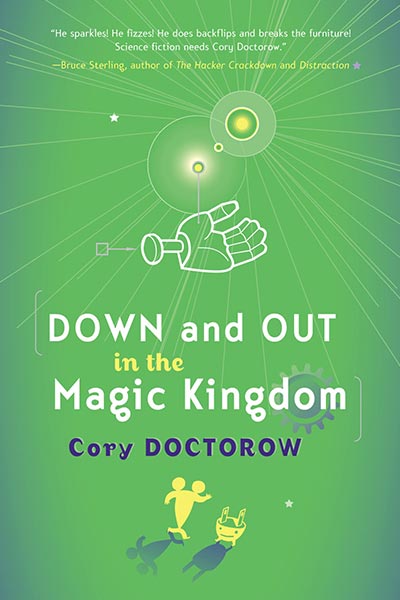
So now I’m reading other people’s stuff — at least while I get more in the can. I’m starting with Bruce Sterling’s brilliant, seminal book The Hacker Crackdown, a 1992 book that recounts the events that led to the founding of The Electronic Frontier Foundation, my former employer. Bruce released the book as a free electronic download nearly 10 years before I did the same with my first novel, Down and Out in the Magic Kingdom.
This book changed my life — and the lives of countless others. It inspired me politically, artistically and socially. Last week, I saw Bruce at his home in Serbia and asked him if he minded my reading this aloud for the next 20 weeks or so. He gave me his blessing — so here it is.
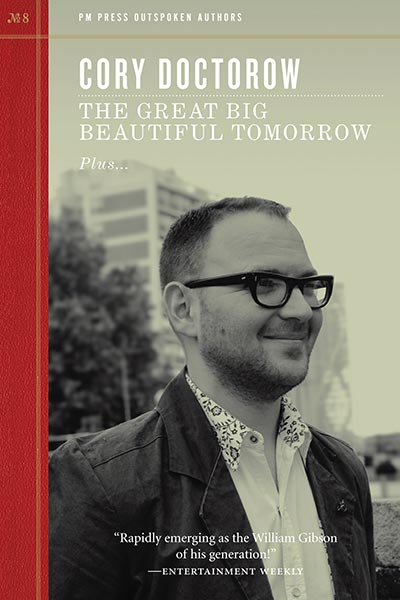
Here’s part seven — the conclusion — of my podcast of my novella-in-progress called “There’s a Great Big Beautiful Tomorrow/Now is the Best Time of Your Life.”
Here’s part six of my podcast of my novella-in-progress called “There’s a Great Big Beautiful Tomorrow/Now is the Best Time of Your Life.”