/ / News

I have an editorial on Popular Science’s website about Grokster, the Supreme Court case on peer-to-peer file-sharing whose decision came down today:

This decision won’t kill P2P sharing. Engineering students write P2P software in 11 lines of code as class assignments. The majority of Internet users use file-sharing software, and that’s not going to stop, no matter how many lawsuits against customers and companies the labels win. P2P will outlast today’s generation of technophobic record execs who are steering their companies to slow, spectacular suicide.

But what today’s decision will kill is American innovation. Chinese and European firms can get funding and ship products based on plans that aren’t fully thoughtcrime-compliant, while their American counterparts will need to convince everyone from their bankers to the courts that they’ve taken all imaginable measures to avoid inducing infringement. This is good news if you’re an American corporate attorney worried about job security, but not if you’re about to invent a new way to enjoy content. Both sides went to the court hoping for clarity on what is and isn’t legal in P2P, and instead, the Court tipped a fresh load of claymores into the decade’s most perilous legal minefield.

/ / News, Someone Comes to Town, Someone Leaves Town

The Book Standard has a great article on the use of Creative Commons licenses for electronic distribution of commercial print books, and the growing schism between the kinds of publishers and authors who complain about Google and Amazon’s services for searching the whole text of books and the kinds of publishers and writers who celebrate it.

“I don’t want to condone piracy,” says Hayden of Tor Books. “But in general I find it not so much appalling as encouraging. We’re the genre that the readers care enough about to be this obsessive about. I want to do something with this, not fight against it.”

Doctorow agrees. “Think about the care that goes into pirating a book!” he says. “That person has not done that because he hates the author and wishes to do the author harm, but because he loves the work and loves the author. Calling that person a thief is about the most suicidal thing you can do.” And, as Stross points out, “the availability of a free e-book actually undercuts the profitability of pirate paper or electronic editions.”

Tim O’Reilly, founder and CEO of O’Reilly Media, the leading publisher of computer books in America, says his company certainly does encounter piracy, the more so since their work attracts the most technically savvy people in the world. The books of theirs that sell the best are the books that are most often pirated (and the most shoplifted, incidentally), but this doesn’t stop those books from selling well. “I’m sure there are people who pass around the links and use the pirate links,” says O’Reilly. “But in our experience they’re not the people who are likely to buy the books anyway.”

/ / News

I’m delivering a midnight keynote at this year’s ADHOC conference (ADHOC is the new name for the old MacHack conferences) in Detroit, July 27-31. Hope to see you there!

The Advanced Developers Hands On Conference (ADHOC) is an annual event that provides a unique environment for computer programmers, engineers, students, and technology enthusiasts. At ADHOC they learn the cutting-edge technologies of the day not only from experts in classroom and conference sessions but also from each other in intense coding marathons. The conference is well rooted in the Macintosh platform – it is also called MacHack – but over the last few years the conference has grown to encompass other technologies, such as UNIX, open source, mobile devices, and more…

The showcase is an intensive, multi-day contest where you try to make something to impress everyone else at the conference. Ideally, you start it when you arrive, and you finish sometime before you go on stage to show it. Many of the coolest bits of software that came out for the Mac started in the Showcase. And, because everyone wants to see something cool, if you need the help from a programming expert who just happens to be at the show, you can ask them, and you’ll learn what you need. You can learn more about the Mac OS in a very short amount of time just by trying to write a showcase entry.

/ / News

Tim Bennett has done a fantastic text remix of my novel, Down and Out in the Magic Kingdom. He says, “The text was generated by separating the novel’s sentences onto separate lines. Then I sorted them alphabetically from the last letter, to the first, so that sentences would cluster in roughly rhyming groups. From that process I refined the rhymes and constructed a short narrative.”

The sun was warm on my skin, and the flowers were in bloom
I woke disoriented and crabby, without my customary morning jolt of endorphin
I lurched out of the bed, naked, and thumped to the bathroom
I nearly started crying right then

I foraged a slice of bread with cheese and noticed a crumby plate in the sink
Lil shot me a look – she looked ready to wring my neck
She set her mug down with a harder-than-necessary clunk
I was an emotional wreck

I was hyperventilating, light-headed
“Lil,” I said, then stopped
I hated how pathetic I sounded
Lil folded her arms and glared

I threw my glass at the wall
She went nuts
Now I wanted to hit something besides the wall
I looked inside myself, and I saw that I didn’t have the guts

/ / Down and Out In the Magic Kingdom, News

Tim Bennett has done a fantastic text remix of Down and Out. He says, “The text was generated by separating the novel’s sentences onto separate lines. Then I sorted them alphabetically from the last letter, to the first, so that sentences would cluster in roughly rhyming groups. From that process I refined the rhymes and constructed a short narrative.”

The sun was warm on my skin, and the flowers were in bloom
I woke disoriented and crabby, without my customary morning jolt of endorphin
I lurched out of the bed, naked, and thumped to the bathroom
I nearly started crying right then

I foraged a slice of bread with cheese and noticed a crumby plate in the sink
Lil shot me a look – she looked ready to wring my neck
She set her mug down with a harder-than-necessary clunk
I was an emotional wreck

I was hyperventilating, light-headed
“Lil,” I said, then stopped
I hated how pathetic I sounded
Lil folded her arms and glared

I threw my glass at the wall
She went nuts
Now I wanted to hit something besides the wall
I looked inside myself, and I saw that I didn’t have the guts

/ / News

Joel “on Software” Splosky put together a Best of Software Writing anthology filled with articles he’s cadged from blogs and other web-writing (he kindly included my Boing Boing post on Notice and Takedown regimes in Canada). The contributor list is fantastic:

Ken Arnold,
Leon Bambrick.
Michael Bean,
Rory Blyth,
Adam Bosworth,
danah boyd,
Raymond Chen,
Kevin Cheng and Tom Chi,
Cory Doctorow,
ea_spouse,
Bruce Eckel,
Paul Ford,
Paul Graham,
John Gruber,
Gregor Hohpe,
Ron Jeffries,
Eric Johnson,
Eric Lippert,
Michael Lopp,
Larry Osterman,
Mary Poppendieck,
Rick Schaut,
Aaron Swartz,
Clay Shirky,
Eric Sink,
why the lucky stiff

The book is out now — I’m looking forward to getting my copy!

The software development world desperately needs better writing. If I have to read another 2000 page book about some class library written by 16 separate people in broken ESL, I’m going to flip out. If I see another hardback book about object oriented models written with dense faux-academic pretentiousness, I’m not going to shelve it any more in the Fog Creek library: it’s going right in the recycle bin. If I have to read another spirited attack on Microsoft’s buggy code by an enthusiastic nine year old Trekkie on Slashdot, I might just poke my eyes out with a sharpened pencil. Stop it, stop it, stop it!

/ / News

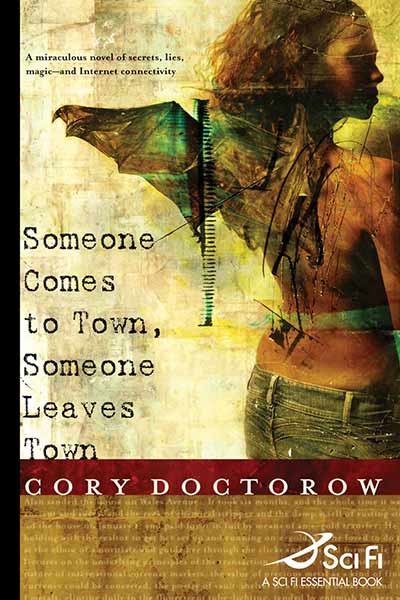
On July 24, I’ll be appearing in the online world Second Life to do a book signing/launch for my new novel, Someone Comes to Town, Someone Leaves Town. The Second Lifers have been conducting a contest to see who can come up with the coolest in-game programmed book-object to decant the novel into, and they’ve picked a winner:


Falk Bergman was the first to bring me by to have a look at his prototype in development, a giant book positioned next to a seat. Sitting on it automatically fixes your camera position in place, to give you the best possible view of the book.

“The viewer in-world itself is very simple,” Falk tells me modestly. “It is basically a shopping agent with two displays that hooks into Page Up and Down [on the keyboards] for changing the pages.”