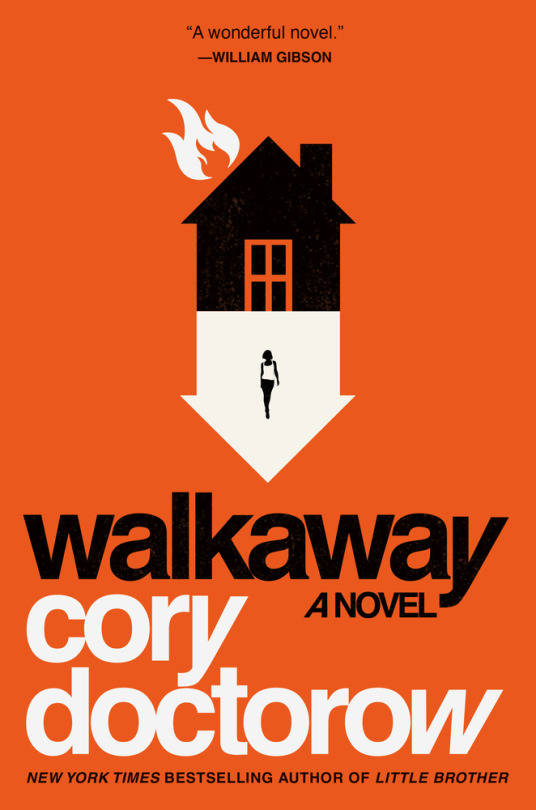
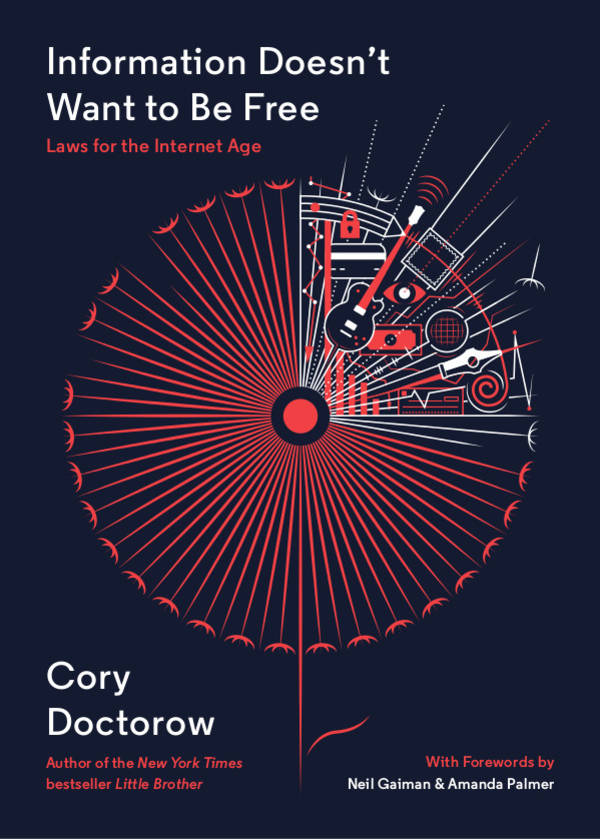
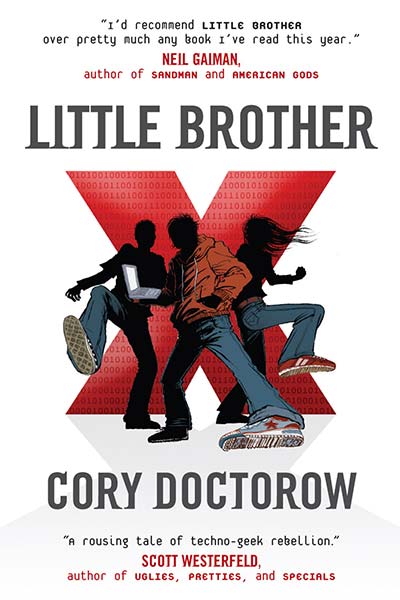
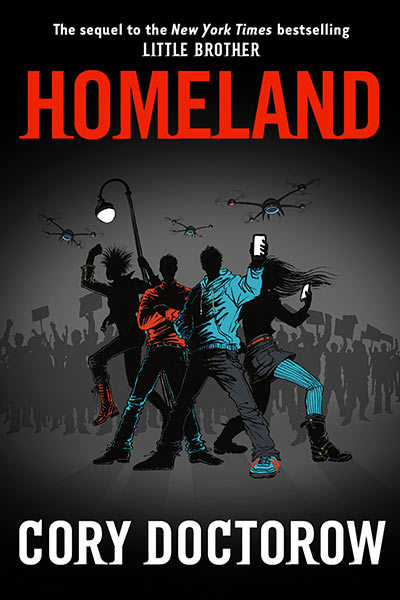
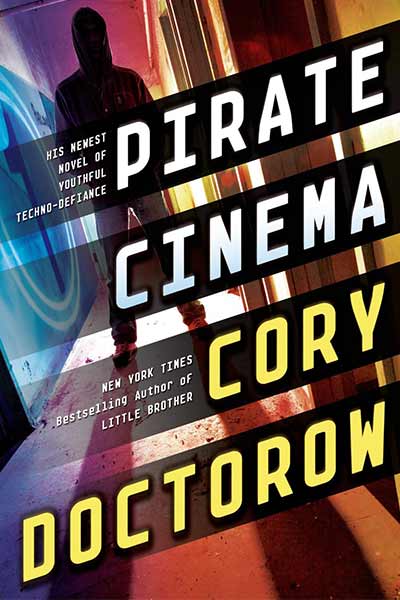
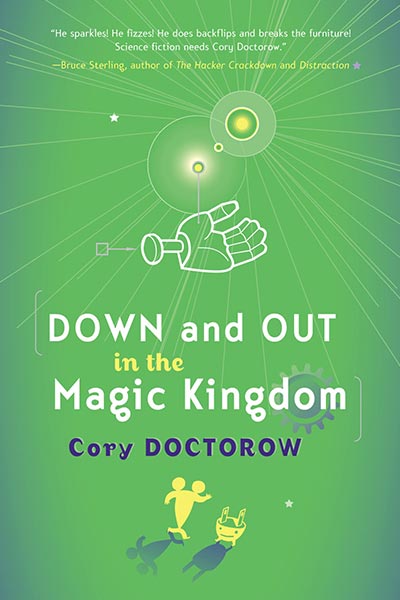
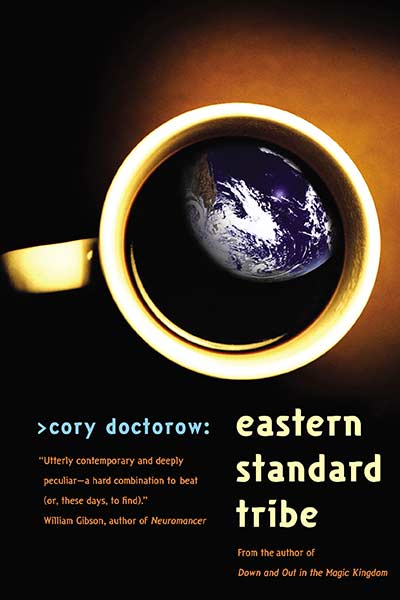
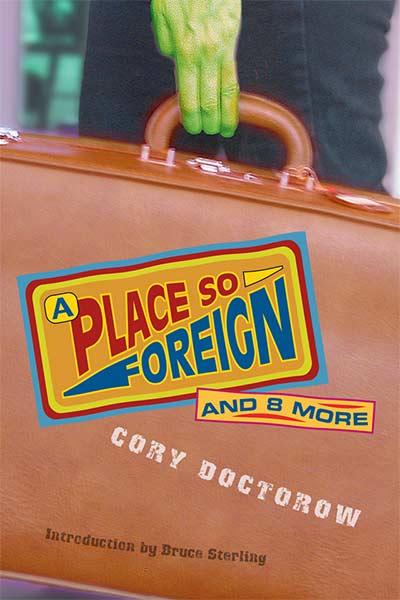
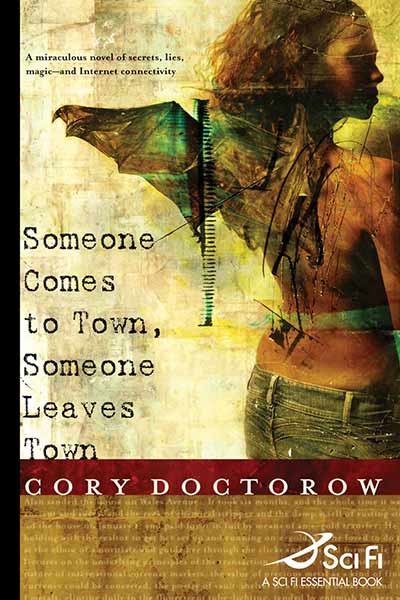
Lirevite is a new, free/open speed-reading program for mobile devices that displays a long text one word at a time, quickly. The three initial test books for the system were my novels Down and Out in the Magic Kingdom, Eastern Standard Tribe, and Someone Comes to Town, Someone Leaves Town.
Alexandre Hervaud from Fragil, a French website, did a short interview with me last month in Nantes at the Utopiales convention and he’s just posted it:
Le copyright est justement l’objet de sa venue aux Utopiales où il donne une conférence à ce sujet. Activiste, il est convaincu de l’absurdité d’un copyright excessif.
« Le copyright, c’est un monopole qui a tendance à entraîner des concentrations. Désormais, dans le domaine artistique, on a 3 ou 4 compagnies qui contrôlent la musique, et autant pour le cinéma et l’édition… D’une certaine manière, c’est comme un retour au mécénat, l’ancêtre du copyright, lorsqu’un artiste ne pouvait exercer son talent qu’avec l’appui des puissants, et pas autrement. Le pape ou le PDG d’Universal, c’est du pareil au même. »
Son baladeur mp3 à portée d’oreilles, il voit le Web comme une chance pour l’Art. « Avec des coûts de distribution très bas, Internet permet à un plus grand nombre de personnes de participer aux pratiques artistiques. L’offre s’en trouve considérablement augmentée, ce qui permet de satisfaire différents publics. »
Forbes Magazine
French translation (Irene Delse)
Forbes has a new special issue on the future of books, and I have a lead op-ed in the issue, called “Giving It Away.”
The thing about an e-book is that it’s a social object. It wants to be copied from friend to friend, beamed from a Palm device, pasted into a mailing list. It begs to be converted to witty signatures at the bottom of e-mails. It is so fluid and intangible that it can spread itself over your whole life. Nothing sells books like a personal recommendation–when I worked in a bookstore, the sweetest words we could hear were “My friend suggested I pick up….” The friend had made the sale for us, we just had to consummate it. In an age of online friendship, e-books trump dead trees for word of mouth.
There are two things that writers ask me about this arrangement: First, does it sell more books, and second, how did you talk your publisher into going for this mad scheme?
There’s no empirical way to prove that giving away books sells more books–but I’ve done this with three novels and a short story collection (and I’ll be doing it with two more novels and another collection in the next year), and my books have consistently outperformed my publisher’s expectations. Comparing their sales to the numbers provided by colleagues suggests that they perform somewhat better than other books from similar writers at similar stages in their careers. But short of going back in time and re-releasing the same books under the same circumstances without the free e-book program, there’s no way to be sure.
What is certain is that every writer who’s tried giving away e-books to sell books has come away satisfied and ready to do it some more.
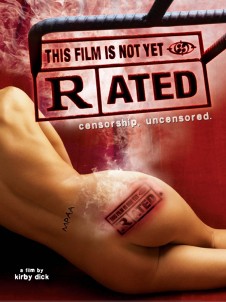
This Thursday, I’ll introduce director Kirby Dick and his movie “This Film is Not Yet Rated” at a free screening at USC. The screening is sponsored by the USC Free Culture club, a campus organization dedicated to promoting liberty, openness, and access to information.
Kirby Dick has graciously agreed to present the screening of his movie, which I reviewed in September. This Film is Not Yet Rated is the best documentary I’ve seen all year, the kind of thing that inspired outrage and sympathy. It tells the hidden story of the MPAA’s rating board, and its systematic discrimination against sympathetic portrayals of gay sexuality and sex in general, and its tacit support for ultra-violence.
The ratings board is shrouded in secrecy, and exists, supposedly, to forestall Congressional censorship of the film industry (an eventuality as unlikely as it is unconstitutional). The board’s membership is secret, as are the names of the appeals committee that is meant to watchdog the organizing. The whole, secretive mess was established by Jack Valenti in his capacity as head of the MPAA, and so it bends over backwards to help filmmakers from the major studios (while shafting indies).

Dick’s documentary revolves around his efforts to unmask the identity of the secret censor board. He hires a private eye and sets her to work (the CSI elements of the film are really juicy — it’s fun to see how private eyes really work). Threaded around this are interviews with filmmakers who’ve had run-ins with the board, and, as a climax, Dick’s own Orwellian adventures in submitting his documentary to the censor board whose identities he has uncovered.
I can’t wait to meet him — one viewing of This Film is Not Yet Rated turned me into an instant, lifelong fan. I hope to see you there!
Where: University of Southern California, Los Angeles: University Park Campus, George Lucas Instructional Building, 108
When: Thursday, November 30, 2006 : 7:00pm to 9:00pm
Here’s part three of the three-part podcast of my story Power Punctuation!, originally published in Starlight 3 in 2001. It’s a funny Pygmalion story about a corporate distopia, secure shredding, and conspiracy theories.

EFF Staff Technologist Seth Schoen will give a free talk next Tuesday at USC in Los Angeles. Seth is the final speaker in my Fulbright Chair lecture series this year, and he’s a fascinating technologist who does an admirable job of explaining the subtle ways in which technology design can affect liberty for better or for worse.
Seth’s the creator of the conceptual Trusted Computing mod, Owner Override, an implementation of Trusted Computing that preserves all the privacy benefits and eliminates the danger to users.
He’s also the maintainer of the Bootable Business Card Linux distribution, the author of the DeCSS Haiku, and one of the investigators who cracked the secret behind the hidden codes in color laser printer outputs.
Where: University of Southern California, Annenberg School for Communication, Room 207 (Los Angeles)
When: Tuesday, November 28, 7PM-9PM
Hope to see you there!
My latest Locus Magazine column is up: “The March of the Polygons:
How High-Definition Is Bad News for SF Flicks” is about the way that the move to high-def screens in the home shortens the commercial life of blockbuster sf movies.
Every year, the effects are more impressive, the impossible more daring. That’s because today’s special effects are almost universally generated on computers, and computers get better every year. Moore’s Law describes the trend in processor performance, doubling every two years and getting faster every year. Other laws describe even steeper curves for storage, bandwidth, and bus-speeds. If Moore’s Law applied to cars, you could replace your $12,500, 10-year-old, 39 miles/gallon Toyota with a $50 car that weighs 200 pounds and gets 500 miles to the gallon today.
It’s a good reason to go to the box-office, but it’s also the source of an awful paradox: yesterday’s jaw-dropping movies are today’s kitschy crap. By next year, the custom tools that filmmakers develop for this year’s blockbuster will be available to every hack commercial director making a Coke ad. What’s more, the Coke ads and crummy sitcoms will run on faster, cheaper hardware and be available to a huge pool of creators, who will actually push the technology further, producing work that is in many cases visually superior to the big studio product from last summer.
It’s one thing for a black-and-white movie at a Hitchcock revival to look a little dated, but it’s galling — and financially perilous — for last year’s movie to date in a period of months. You can see what I mean by going to a Lord of the Rings festival at your local rep-house and comparing the generation-one creatures in Fellowship of the Ring to the gen-three beasts in Return of the King.
Here’s the audio from last night’s talk at PSU, courtesy of Chris Dawson.
Here’s part two of the three-part podcast of my story Power Punctuation!, originally published in Starlight 3 in 2001. It’s a funny Pygmalion story about a corporate distopia, secure shredding, and conspiracy theories.