Thomas Crampton cornered me in China this week with a video camera and asked me how to blog — here’s a video of my answer. In a nutshell: pretend you’re a wire-service stringer and you’ll end up writing better headlines.
Thomas Crampton cornered me in China this week with a video camera and asked me how to blog — here’s a video of my answer. In a nutshell: pretend you’re a wire-service stringer and you’ll end up writing better headlines.
I’m coming to Beijing, China next week and I’ll be stopping in at the Beijing Bookworm to give a talk on China, the Information Economy and copyright — and I’ll be reading a little never-before-seen new fiction while I’m there. Hope to see you!
When: Wednesday 12th September 7.30pm
Where: The Bookworm, Building 4, Nan Sanlitun Road, Chao Yang District, Beijing, 100000, P.R. China, (010) 6586 9507, books@beijingbookworm.com
My latest column in Locus Magazine has just gone live. Called “Free(konomic) E-books,” it’s an attempt to enumerate the evidence that Creative Commons and other scheme for giving away free ebooks works to sell printed books. In my next column, I’l expain how Creative Commons works, and how science fiction writers can use it.
Many of us have assumed, a priori, that electronic books substitute for print books. While I don’t have controlled, quantitative data to refute the proposition, I do have plenty of experience with this stuff, and all that experience leads me to believe that giving away my books is selling the hell out of them.
More importantly, the free e-book skeptics have no evidence to offer in support of their position — just hand-waving and dark muttering about a mythological future when book-lovers give up their printed books for electronic book-readers (as opposed to the much more plausible future where book lovers go on buying their fetish objects and carry books around on their electronic devices).

Last night at the World Science Fiction Convention in Yokohama, Japan, I sat down for an interview with Patrick Nielsen Hayden, the editor who runs the largest science fiction line in the world for Tor Books. Patrick is my editor and a friend, and we had a rollicking, quick discussion about copyright, technology and the future of science fiction. It’s live now on the Tor podcast, for your listening pleasure.
MP3 link, Link to Tor podcast homepage, Link to podcast feed
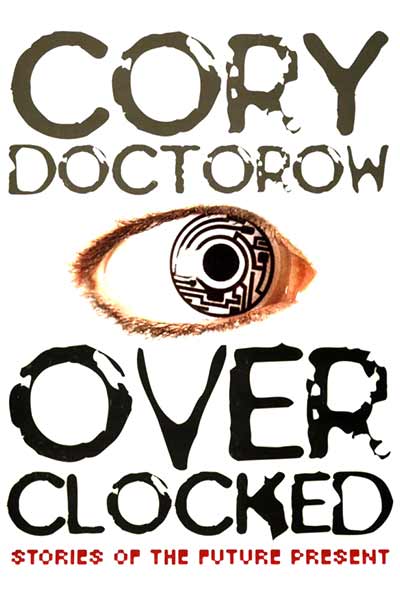
Ariel Maidana has produced a Spanish fan-translation of Printcrime, the short-short story that opens my latest collection, Overclocked. Like all the stories in that book, Printcrime is licensed under a Creative Commons Attribution-NonCommercial-ShareAlike license that encourages readers to play with, remix and adapt the text.
Los policías machacaron la impresora de mi padre cuando yo tenía ocho años. Recuerdo su olor como de papel film recién salido del microondas, y la mirada de feroz concentración de Pa cuando la llenaba con pasta fresca, y el aire cálido, como recién horneado, de los objetos que salían de ella.
Los policías entraron por la puerta agitando sus porras, uno de ellos recitando los términos de la orden de allanamiento con un megáfono. Uno de los clientes de papá lo había vendido. La ipolicía pagaba en fármacos de alta calidad — mejoradores de rendimiento, suplementos para la memoria, estimulantes metabólicos. La clase de cosa que cuesta una fortuna sin receta; la clase de cosa que podrías imprimir en casa, si no te importara el riesgo de tener tu cocina llena con una súbita aglomeración de cuerpos grandes y robustos, grandes porras agitándose en el aire, machacando a cualquier persona o cosa que se pusiera en su camino.
Ariel Maidana has produced a Spanish fan-translation of Printcrime, the short-short story that opens my latest collection, Overclocked. Like all the stories in that book, Printcrime is licensed under a Creative Commons Attribution-NonCommercial-ShareAlike license that encourages readers to play with, remix and adapt the text.
Los policías machacaron la impresora de mi padre cuando yo tenía ocho años. Recuerdo su olor como de papel film recién salido del microondas, y la mirada de feroz concentración de Pa cuando la llenaba con pasta fresca, y el aire cálido, como recién horneado, de los objetos que salían de ella.
Los policías entraron por la puerta agitando sus porras, uno de ellos recitando los términos de la orden de allanamiento con un megáfono. Uno de los clientes de papá lo había vendido. La ipolicía pagaba en fármacos de alta calidad — mejoradores de rendimiento, suplementos para la memoria, estimulantes metabólicos. La clase de cosa que cuesta una fortuna sin receta; la clase de cosa que podrías imprimir en casa, si no te importara el riesgo de tener tu cocina llena con una súbita aglomeración de cuerpos grandes y robustos, grandes porras agitándose en el aire, machacando a cualquier persona o cosa que se pusiera en su camino.
Here’s part ten of my reading of Bruce Sterling’s brilliant, seminal book The Hacker Crackdown, a 1992 book that recounts the events that led to the founding of The Electronic Frontier Foundation, my former employer.
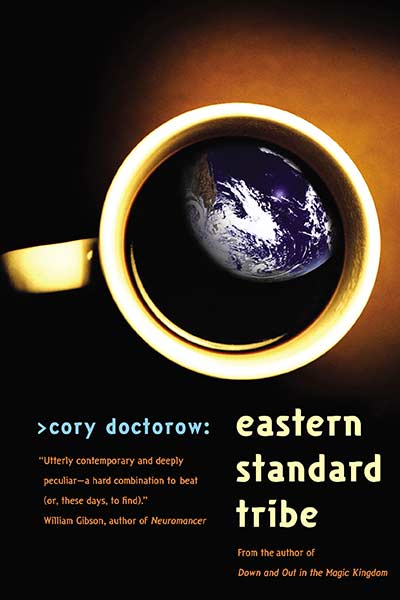
Joe Falconer of the band Midnight.Haulkerton has done another song based on one of my works — this time, a track based on my novel Eastern Standard Tribe. The song is CC-licensed (as is the book) and ready for you to share and play with.
What is the theme of this story?
What is the theme of life?
Do you want to be smart? Do you want to be remembered?
Do you want to be happy? Do you want to be content?
If you want to be smart gotta be unhappy
If you want to be happy gotta live in ignorant bliss
If you want to be remembered gotta go down in flames
If you want to be content you ain’t gonna be missed