/ / News

Jade Colbert transcribed my speech from the Canadian National Reading Summit, entitled “How to Destroy the Book.” She did a great job!

There is a group of powerful anti-copyright activists out there who are trying to destroy the book. These pirates would destroy copyright, and they have no respect for our property. They dress up their thievery in high-minded rhetoric about how they are the true defenders and inheritors of creativity, and they have sold this claim around the world to regulators and lawmakers alike. There are members of Parliament and Congress-people who are unduly influenced by them. They say they’re only trying to preserve the way it’s always been. They claim that their radical agenda is somehow conservative. But what they really see is a future in which the electronic culture market grows by leaps and bounds and they get to be at the centre of it. They claim that this is about ethics, but anyone who thinks about it for a minute can see that it’s about profit.

We are the people of the book. We love our books. We fill our houses with books. We treasure books we inherit from our parents, and we cherish the idea of passing those books on to our children. Indeed, how many of us started reading with a beloved book that belonged to one of our parents? We force worthy books on our friends, and we insist that they read them. We even feel a weird kinship for the people we see on buses or airplanes reading our books, the books that we claim. If anyone tries to take away our books—some oppressive government, some censor gone off the rails—we would defend them with everything that we have. We know our tribespeople when we visit their homes because every wall is lined with books. There are teetering piles of books beside the bed and on the floor; there are masses of swollen paperbacks in the bathroom. Our books are us. They are our outboard memory banks and they contain the moral, intellectual, and imaginative influences that make us the people we are today.

Copyright recognizes this. It says that when you buy a book, you own the book. It’s yours to give away, yours to keep, yours to license or to borrow, to inherit or to be included in your safe for your children. For centuries, copyright has acknowledged that sacred connection between readers and their books. We think of copyright as something that regulates things within a bunch of buckets—DVDs, video games, records—but books are more than all of these things. Books are older than copyright. Books are older than publishing. Books are older than printing!

/ / News, Overclocked

Over the weekend, two educators wrote to me to tell me about blogs that contain curricular material based on my books.

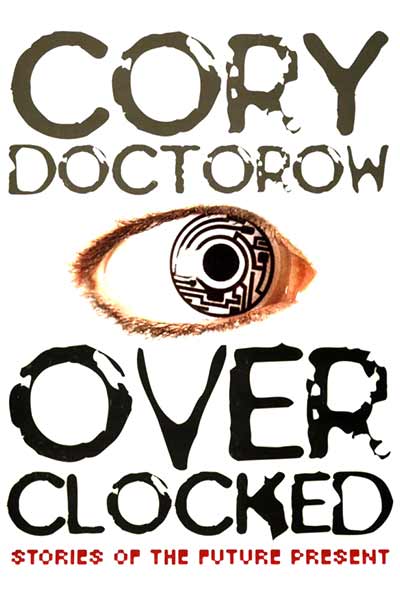
The first, from Donald Riggs at Drexel College in Philadelphia, contains links and supplementary material for students reading my second short story collection, Overclocked. Donald put the material together because Overclocked was Drexel’s book of the year, given to the entire freshman class (I visited campus in November and met with students, taught a writing program, and gave a lecture). He’s got a ton of good supplementary links and glossaries explaining the technical and genre terms for a lay audience.

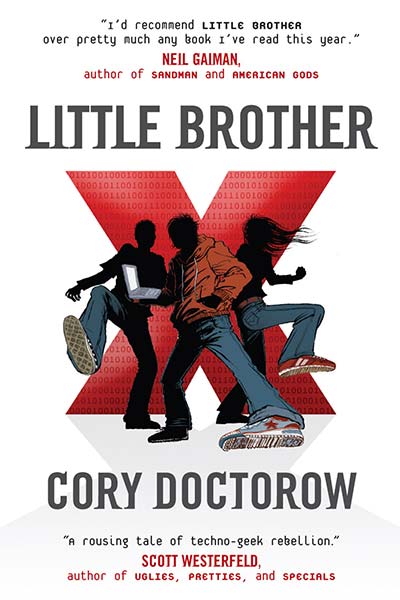
The second, from Deborah Menkart at the Zinn Education Project: Teaching a People ’s History project is a recommendation for teachers whose students are working with Howard Zinn’s brilliant “Peoples’ History” books to include Little Brother in their works.

Coming from a family of teachers (both parents, brother) and serving on faculty at two universities at present (Open University, UK and University of Waterloo, Canada), I’m always intensely gratified when educators use my material with their students.

/ / Little Brother, News

Over the weekend, two educators wrote to me to tell me about blogs that contain curricular material based on my books.

The first, from Donald Riggs at Drexel College in Philadelphia, contains links and supplementary material for students reading my second short story collection, Overclocked. Donald put the material together because Overclocked was Drexel’s book of the year, given to the entire freshman class (I visited campus in November and met with students, taught a writing program, and gave a lecture). He’s got a ton of good supplementary links and glossaries explaining the technical and genre terms for a lay audience.

The second, from Deborah Menkart at the Zinn Education Project: Teaching a People ’s History project is a recommendation for teachers whose students are working with Howard Zinn’s brilliant “Peoples’ History” books to include Little Brother in their works.

Coming from a family of teachers (both parents, brother) and serving on faculty at two universities at present (Open University, UK and University of Waterloo, Canada), I’m always intensely gratified when educators use my material with their students.

/ / News

Over the weekend, two educators wrote to me to tell me about blogs that contain curricular material based on my books.

The first, from Donald Riggs at Drexel College in Philadelphia, contains links and supplementary material for students reading my second short story collection, Overclocked. Donald put the material together because Overclocked was Drexel’s book of the year, given to the entire freshman class (I visited campus in November and met with students, taught a writing program, and gave a lecture). He’s got a ton of good supplementary links and glossaries explaining the technical and genre terms for a lay audience.

The second, from Deborah Menkart at the Zinn Education Project: Teaching a People ’s History project is a recommendation for teachers whose students are working with Howard Zinn’s brilliant “Peoples’ History” books to include Little Brother in their works.

Coming from a family of teachers (both parents, brother) and serving on faculty at two universities at present (Open University, UK and University of Waterloo, Canada), I’m always intensely gratified when educators use my material with their students.

/ / News

The Digital Democracy project and the All-Burma I.T. Student Union have just a few hours left in a Kickstarter project to translate my novel Little Brother in free electronic editions in four Burmese languages: Burmese, Karen, Chin and Kachin. As they write, “[the translation will] broaden the debate on using technology in the struggle for freedom against tyranny. By distributing electronic versions of the translated book, our goal is to inspire people from the country with Cory Doctorow’s compelling tale of a teen and his friends who take on Big Brother, using technology to challenge an authoritarian regime.”

They’re 64% of the way there as of this writing, and they need another $800 or so in the next 43 hours. I’m pretty excited by this novel use of goal-oriented online fundraising by activist groups, and the Burmese lot really seem to have a handle on how technology fits into their national struggles for justice.

/ / Little Brother, News

The Digital Democracy project and the All-Burma I.T. Student Union have just a few hours left in a Kickstarter project to translate my novel Little Brother in free electronic editions in four Burmese languages: Burmese, Karen, Chin and Kachin. As they write, “[the translation will] broaden the debate on using technology in the struggle for freedom against tyranny. By distributing electronic versions of the translated book, our goal is to inspire people from the country with Cory Doctorow’s compelling tale of a teen and his friends who take on Big Brother, using technology to challenge an authoritarian regime.”

They’re 64% of the way there as of this writing, and they need another $800 or so in the next 43 hours. I’m pretty excited by this novel use of goal-oriented online fundraising by activist groups, and the Burmese lot really seem to have a handle on how technology fits into their national struggles for justice.

/ / News

In my latest Publishers Weekly column, I explain why I’m not even going to try to sell downloads of the audiobook of the my forthcoming experimental short story collection, With a Little Help: Apple won’t carry it without DRM; Audible won’t carry it without an abusive EULA; and all the major digital delivery systems are crufty and needlessly complicated.


For my next book, Makers, we tried again. This time Audible agreed to carry the title without DRM. Hooray! Except now there was a new problem: Apple refused to allow DRM-free audiobooks in the Apple Store—yes, the same Apple that claims to hate DRM. Okay, we thought, we’ll just sell direct through Audible, at least it’s a relatively painless download process, right? Not quite. It turns out that buying an audiobook from Audible requires a long end-user license agreement (EULA) that bars users from moving their Audible books to any unauthorized device or converting them to other formats. Instead of DRM, they accomplish the lock-in with a contract.

I came up with what I thought was an elegant solution: a benediction to the audio file: “Random House Audio and Cory Doctorow, the copyright holders to this recording, grant you permission to use this book in any way consistent with your nation’s copyright laws.” This is a good EULA, I thought, as it stands up for every word of copyright law. Random House was game, too. Audible wasn’t. So we decided not to sell through Audible, which I was intensely bummed about, because I really like Audible. They have great selection, good prices, and they’re kicking ass with audiobooks.

/ / News

My latest Guardian column, “Streaming will never stop downloading,” argues against the idea that streaming can “solve the copyright problem” because “no copies are made.” This is technically untrue, and the more we pretend it isn’t, the worse it will get for us.

First of all, while streaming music from Last.fm is a great way to listen to music you haven’t discovered yet, there’s no reason to believe that people will lose the urge to collect music.

Indeed, the record industry seems to have forgotten the lesson of 70 years’ worth of radio: people who hear songs they like often go on to acquire those songs for their personal collections. It’s amazing to hear record industry executives deny that this will be the case, especially given that this was the dominant sales strategy for their industry for most of a century. Collecting is easier than it has ever been: you can store more music in less space and organise it more readily than ever before.

People will go on using streaming services, of course. They may even pay for them. But people will also go on downloading. Streaming won’t decrease downloading. If streaming is successful – that is, if it succeeds in making music more important to more people – then downloading will increase too. With that increase will come a concomitant increase in Big Content’s attacks on the privacy and due process rights of internet users, which, these days, is pretty much everyone.

If you want to solve the “downloading problem” you can’t do it by waving your hands and declaring that a totally speculative, historically unprecedented shift in user behaviour – less downloading – will spontaneously arise through the good offices of Last.fm.

Streaming will never stop downloading

/ / Makers, News

The Guardian’s Michelle Pauli has written a stupendous profile of me and review of MAKERS for today’s edition:

In Makers, 3D printers are used to run off everything from homes for squatters to the fairground rides that cause the plot-twisting showdown with Disney. But, typically for a Doctorow novel, it’s not as far-fetched as it might sound: the 3D world is already here. He jumps up to show me a 3D museum object, part of a bear’s jaw, that was scanned and printed in six hours, and explains that he’s waiting for the post to bring one of the first 3D-printed objects he’s ordered online (“a beautiful big steel cross that looks like a nun’s cross except that the tips are screwdriver tips and it’s actually a multi-driver and it hangs around your neck from a leather thong!”) “We’ll have 3D printers which will make the world weird and they will beget something even weirder. 3D printers are just for starters!” he says, gleefully.

Despite his success in fiction – last year’s young adult novel Little Brother was a New York Times bestseller and he has previously won the Locus award and been nominated for Hugo and Nebula awards – Doctorow is better known in some quarters for his political activism around digital freedom and open rights. He’s the former European director of the Electronic Frontier Foundation, a civil liberties group that defends freedom in technology law, policy and standards; he co-founded the UK Open Rights Group; and he’s currently campaigning on the government’s draconian digital rights bill. Both sides of his work come together in his novels, not just in terms of subject matter but in the way they are distributed. Although published by mainstream presses, Doctorow also releases all his books for free download from his website under a creative commons licence, and talks enthusiastically about the uses people have made of these free online versions of his books, from foreign translations and student films to a teacher in a Detroit school for the blind who was able to run the download of Little Brother through the school’s Braille embosser for her students without having to painstakingly retype the whole book first.