Today’s Vancouver Sun has a nice article on me on the front page of the Business section.

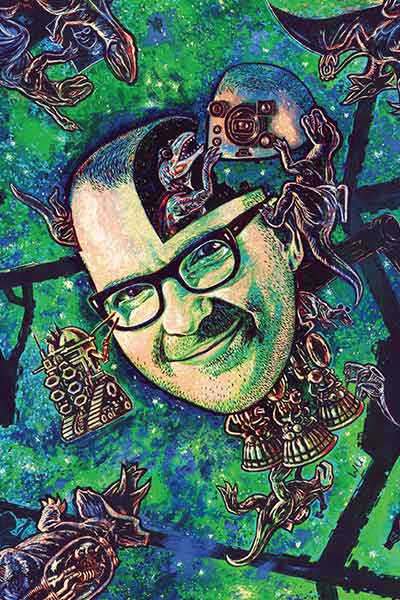
Webtoonist Neil Gorman has bessed me with a new toon in my honor — and it’s a good ‘un!
The British sf podcast “Yatterings” (produced by Iain Elmsley, proprietor of the brilliant Aust Gate bookseller) has a new interview up with me about sf writing and how it relates to the future.

A reminder: I’m coming to Toronto this coming weekend (Mar 2-4) to be a guest of honor at Ad Astra, the regional sf convention. It was my first-ever con — I volunteered as a gofer in exchange for free admission, and slept on the floor of the “gofer hole,” a shared hotel room — and it’s an incredible thrill to be asked back as Guest of Honor.
On that note, the British sf podcast “Yatterings” (produced by Iain Elmsley, proprietor of the brilliant Aust Gate bookseller) has a new interview up with me about sf writing and how it relates to the future.
See also:
Torontonians: win the right to name a character in my book
Jason Adams attended my lecture on privacy (From Myspace to Homeland Security: Privacy and the Totalitarian Urge) last week at Duke University and recorded it for his podcast. He’s just posted it — thanks, Jason!
Link,
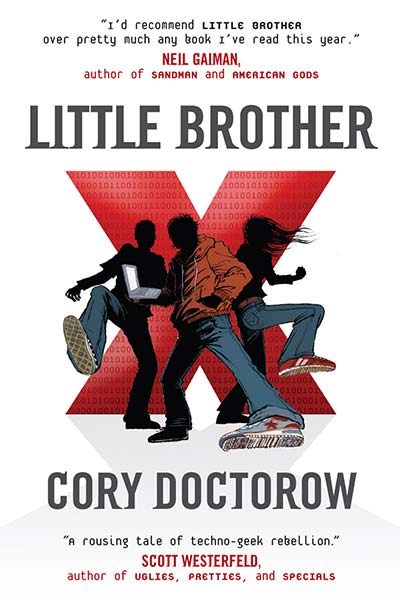
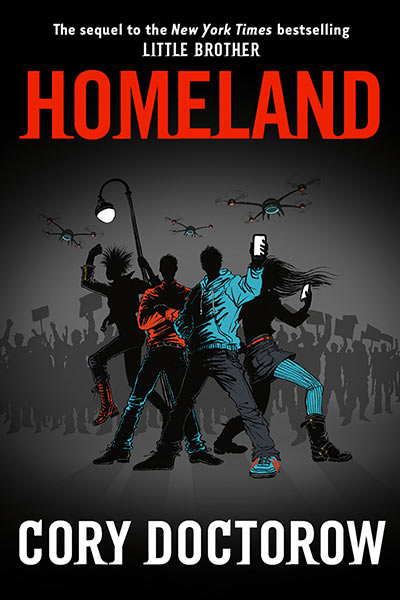
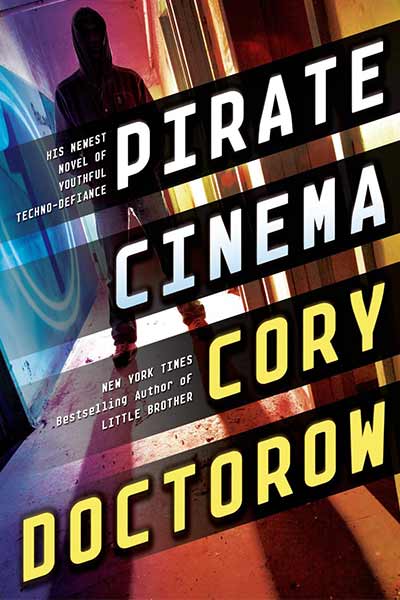
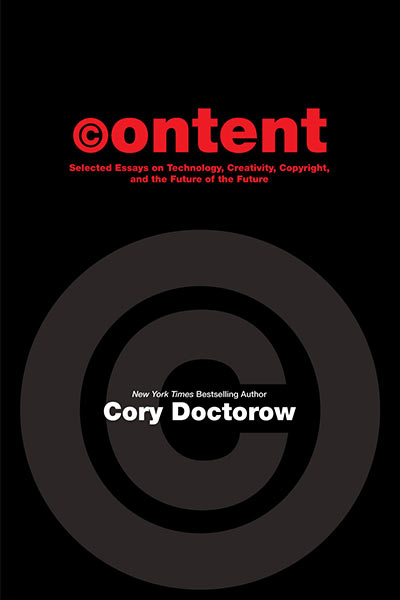
Bill Seabrook has compiled an astounding and comprehensive bibliography of all my books and stories, with cover art, tables of contents, and publication data. This is about 10,000 times more detail oriented than anything I’ve ever done, and I’m speechless with gratitude to him for doing this. I’ve put it all online — hope you find it as useful as I do! Thanks, Bill!
Review:
Claude LaLumiere
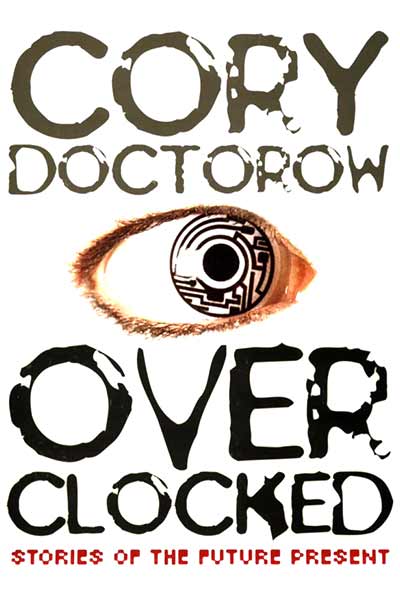
In these quirky, brashly engaged “stories of the future present” Cory Doctorow shows us life from the point-of-view of the plugged-in generation and makes it feel like a totally alien world.
Claude Lalumiere, Montreal Gazette
Review:
Sci Fi Weekly
Cory Doctorow gives away his vital writing secret right here in these pages, a guaranteed method for producing cutting-edge, engaged, supercharged SF. In his preface to “Anda’s Game,” he says, “The easiest way to write futuristic (or futurismic) science fiction is to predict, with rigor and absolute accuracy, the present day.” Ah, but like the words of all oracles, his pronouncement has a cryptic, paradoxical air to it. What exactly can this mean?
Well, he’s simply giving us the classical, core methodology of SF from its Golden Age, restated for post-modern times. Doctorow is just doing, after all, what Robert Heinlein did at his best: steeping himself in the culture of the present and them amping up what he registers as significant to a day-after-tomorrow condition. Sounds trivial, put that way, doesn’t it? But the relative paucity of Heinleins and Doctorows on the market indicates it’s not as easy as it looks. One has to canvass thoroughly the whole of scientific, artistic and sociological progress, distill the essences, and then find a plot and characters that can best embody the lessons to be conveyed. Knowing a lot about history and the human heart is essential as well. In other words, even before one begins the conventional task of storytelling, one already faces a full-time job of analysis and prognostication.
But Doctorow, like Heinlein, is up to the task. As these stories illustrate, he has a knack for identifying those seminal trends of our current landscape that will in all likelihood determine the shape of our future(s). Add in a recursive affection for past landmarks of SF (besides the Asimovian references, there’s a lot of Clifford Simak in the “Row-Boat” piece), and a gentle empathy for the underdogs in such scenarios, and you get a winning narrative and ideational combination.
Paul Di Filippo, SciFi Weekly
Here’s part 8 — chapters 19-21 — of the reading of my novel Eastern Standard Tribe.
I’ve just posted the first six lectures from my undergrad class at the University of Southern California: “Pwned: Is Everyone on Campus a Copyright Criminal?” The lectures were recorded by Garrett Sergeant, a volunteer who is a local director/producer/videographer, and we’ll be putting up new lectures as they’re available. The whole thing is available as a podcast feed, or you can download them from the Internet Archive, where they’re available as Oggs, MP3s, streams and so on.