/ / News

In the run-up to last week’s benefit for the Comic Book Legal Defense Fund, Brian Heater of the Daily Crosshatch blog conducted a two part interview with me; he’s just posted part two.

Do you have this extended universe of fan fiction in mind when you work on these books?

No, not at all. It’s actually kind of interesting, I think. The way I approach the creative element of what I do and the critical element are almost completely separate. I sit down and write almost as a therapeutic exercise. When I’m finished writing for the day, I often don’t remember what I’ve written. I go back and review it, and I’m often surprised by it. I’ve written stories and novels and things that have taken me years and years to write and when I got to the ending, I didn’t like it and rethought it entirely and then rewrote the ending and then turned back to the first page, only to realize that I’d foreshadowed that ending, four years before, but hadn’t known until that day.

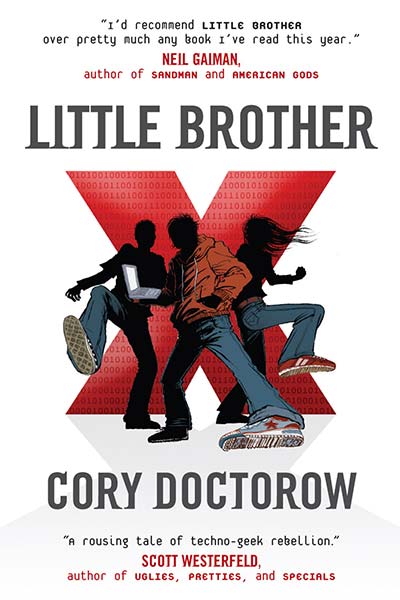
I have almost no premeditation on cultural-political things when I write. Even on a political book like Little Brother, it was actually an emotional reaction to a bunch of things that I was feeling in regard to the “war on terror.” I didn’t sit down and say, “what’s the best way to alarm children about surveillance?” I sat down and thought, “how can I artistically approach this subject in a way that I find the most aesthetically pleasing?”

But you are hoping that, once it’s out there, readers will adopt the work in creative ways.

Yeah, well, in the same way that there’s a compositional and editorial process, when you do anything creative, when I finish with the story, look at it, edit it, and prepare it for publication, and show it to my agent, and so on, I certainly do think of that at that stage. But the creative process, for me, is all about getting into a nice space and doing something totally creative that has almost no agenda aside from a creative one.

Part 1, Part 2

/ / News, Overclocked

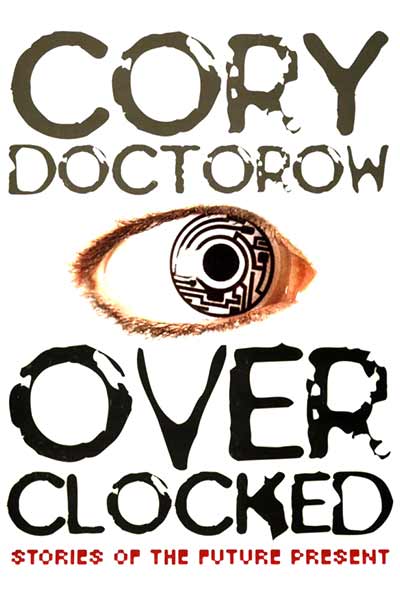
Friday’s post announcing that a fan named Eduardo Mercer had translated my story Printcrime into Brazilian Portuguese sparked two more translations; Luis Filipe Silva translated the story into European Portuguese and Paul Pajo translated it into Filipino. I’m particularly excited about the Filipino translation; I think it might be the first story of mine to be translated into Filipino!

Filipino fan-translation

European Portuguese fan-translation

See also: Printcrime in Portuguese

/ / News

Friday’s post announcing that a fan named Eduardo Mercer had translated my story Printcrime into Brazilian Portuguese sparked two more translations; Luis Filipe Silva translated the story into European Portuguese and Paul Pajo translated it into Filipino. I’m particularly excited about the Filipino translation; I think it might be the first story of mine to be translated into Filipino!

Filipino fan-translation

European Portuguese fan-translation

See also: Printcrime in Portuguese

/ / News, Overclocked

Eduardo Mercer’s just produced a Brazilian Portuguese fan-translation of my story Printcrime — making five translations in total (as well as two audio adaptations, a mini-comic and some wicked 3D fan-art). For a 700 word story, it’s sure attracted a lot of attention and fan activity!

Os tiras destruiram a impressora do meu pai quando eu tinha oito anos. Eu me lembro do cheiro quente de rolopack no microondas, do olhar de concentração furiosa do papi enquanto ele a enchia de geleca fresca e da sensação de recém tirado do forno dos objetos que saíam dela.


Os tiras entraram brandindo os cacetetes, um deles lendo o mandato através de um megafone. Um dos clientes do papi tinha vendido ele. A polícia pagou em drogas de alto nível – anabolizantes, suplementos de memória, aceleradores metabólicos. O tipo de coisa que custa uma fortuna na farmácia; o tipo de coisa que você pode imprimir em casa, se não se importar com o risco da sua cozinha se encher de corpos grandes e musculosos com cacetetes balançando no ar acertando tudo e todos em seu caminho.

Printcrime – Copie esta história

/ / News

Eduardo Mercer’s just produced a Brazilian Portuguese fan-translation of my story Printcrime — making five translations in total (as well as two audio adaptations, a mini-comic and some wicked 3D fan-art). For a 700 word story, it’s sure attracted a lot of attention and fan activity!

Os tiras destruiram a impressora do meu pai quando eu tinha oito anos. Eu me lembro do cheiro quente de rolopack no microondas, do olhar de concentração furiosa do papi enquanto ele a enchia de geleca fresca e da sensação de recém tirado do forno dos objetos que saíam dela.


Os tiras entraram brandindo os cacetetes, um deles lendo o mandato através de um megafone. Um dos clientes do papi tinha vendido ele. A polícia pagou em drogas de alto nível – anabolizantes, suplementos de memória, aceleradores metabólicos. O tipo de coisa que custa uma fortuna na farmácia; o tipo de coisa que você pode imprimir em casa, se não se importar com o risco da sua cozinha se encher de corpos grandes e musculosos com cacetetes balançando no ar acertando tudo e todos em seu caminho.

Printcrime – Copie esta história

/ / Little Brother, News, Remixes


Chris sez, “I am also a member of the Cincinnati 2600 group. We get together once a month and listen to folks present on nifty things like SQL injections and packet sniffing. In early August we did lightning talks, which are little 5 minute presentations instead of the usualy 30-60 minute format. I gave 3 lightning talks that were inspired by Marcus’ exploits in Little Brother: running applications from a USB drive, using block encryption to safeguard data on a USB stick, and hiding your encrypted data in a deniable format in the event of capture and torture.

Click the links above to download Chris’s slides — this is just too damned cool!

/ / News

Greg Young sez, “Had some time on my hands recently which I’ve filled by transcribing the Cambridge business lecture you gave recently. (Having found it interesting, but being a rather ‘auditory’ thinker who finds it difficult to indulge my own mental flights from the taking-off point of your speech while the speech itself is actually playing.)”

Back when I posted this the first time around, many of you asked for a transcript. Many thanks to Greg for this yeoman service!

Cory Doctorow’s Cambridge Business Lecture, given 22nd July, 2008

See also: My Cambridge Business Lectures talk on “Life in the Information Economy”