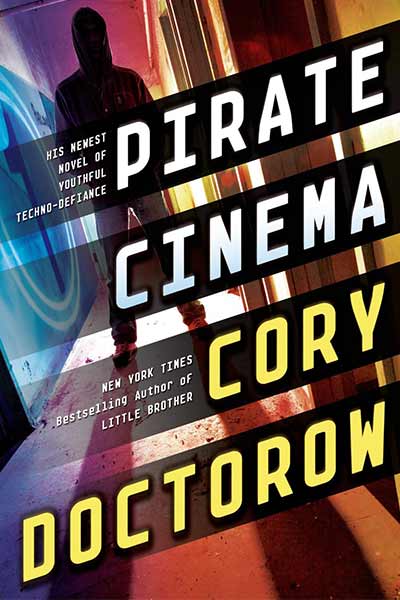
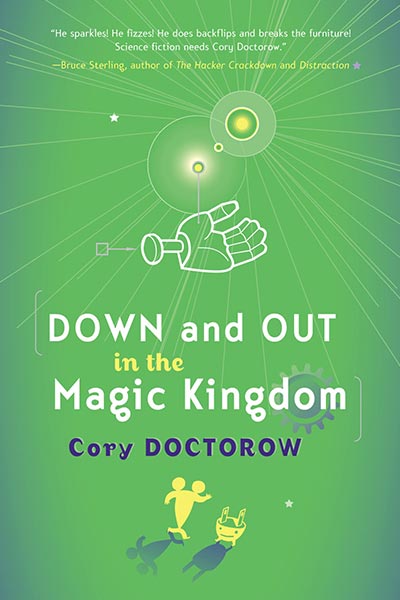
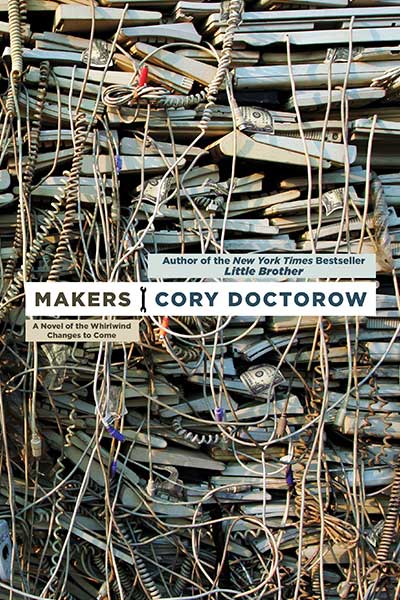
Holy crow do I *ever* love the cover art for the US (top) and UK (bottom) editions of Makers, my next novel, coming from Tor and HarperCollins respectively in Oct/Nov.
Holy crow do I *ever* love the cover art for the US (top) and UK (bottom) editions of Makers, my next novel, coming from Tor and HarperCollins respectively in Oct/Nov.
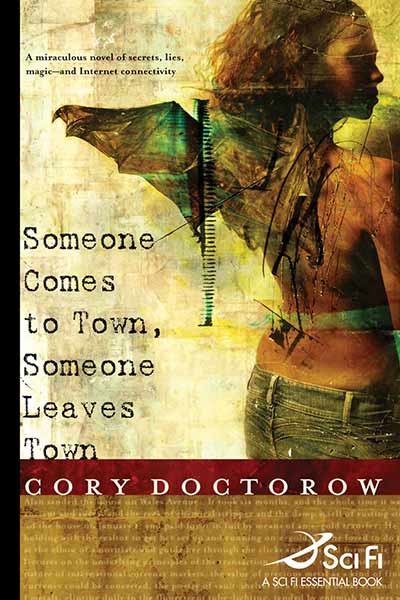
Here’s part twenty-five of my reading of my 2005 novel, Someone Comes to Town, Someone Leaves Town.
I’m one of the keynoters at next week’s EuroPython convention in Birmingham, England — looks like a hell of a show, with further keynotes by Bruce Eckel and Professor Sir Tony Hoare and a whack of great talks and tutorials.
Being a Community Conference means that EuroPython is run entirely by volunteers, that means us the participants. Many of the things that have to be done to run a successful conference can be carried out remotely, and every year Pythonistas from all over Europe help…
EuroPython aims to provide inspirational talks and a friendly atmosphere, designed to help people build contacts and learn from each other’s experiences. EuroPython 2009 offers a talks programme oriented around the following themes:
* Python Language (featuring Python 3, Python implementations (IronPython/Jython/PyPy) and Python packaging)
* Python in Action (Python projects and deployments in government, industry and beyond)
* Mobile Computing (Python in mobile and embedded devices)
* Large Scale Python (Python in research, distributed computing, scientific computing)
* Web Programming (Python on the Web: Zope 3, Django and everything else)
* Database Programming (object-relational mappers and data management techniques)
* User Interfaces (across or beyond the Web, the desktop and the device)
* Games (featuring pygame, pyglet and other game-making technologies)
I’ve got a new feature up on Internet Evolution today, a piece called “Internet ©rapshoot: How Internet Gatekeepers Stifle Progress,” about how everybody wants to be a gatekeeper — the studios and publishers, the bookstores and online retailers and theaters, the “creators rights’ groups” and how that ends up screwing everyone:
So, how do you use copyright to ensure that the future is more competitive and thus more favorable to creators and copyright industries?
It’s pretty easy, really: Use your copyrights to lower the cost of entering the market instead of raising it.
What if the Recording Industry Association of America (RIAA) had started out by offering MP3 licenses on fair terms to any wholesaler who wanted to open a retailer (online or offline), so that the cost of starting a Web music store was a known quantity, rather than a potentially limitless litigation quagmire?
What if the Motion Picture Association of America (MPAA) and the North American Broadcasters Association made their streams available to anyone who paid a portion of their advertising revenue (with a guaranteed minimum), allowing 10 million video-on-demand systems to spring up from every garage in the world?
What if the Authors Guild had offered to stop suing Google for notional copyright violations in exchange for Google contributing its scans to a common pool of indexable books available to all search-engines, ensuring that book search was as competitive as Web search?
Copyright is a powerful weapon, and it grows more powerful every day, as lawmakers extend its reach and strength. Funny thing about powerful weapons, though: Unless you know how to use them, they make lousy equalizers. As they say in self-defense courses, “Any weapon you don’t know how to use belongs to your opponent.”
Recording artists get an extra 45 years of copyright, and it’s promptly taken from them by the all-powerful record labels, who then use it to strengthen their power by extending their grasp over distribution channels. Authors are given the right to control indexing of their works, and it’s promptly scooped up by Google, who can use it to prevent competitors from giving authors a better deal.
Internet ©rapshoot: How Internet Gatekeepers Stifle Progress
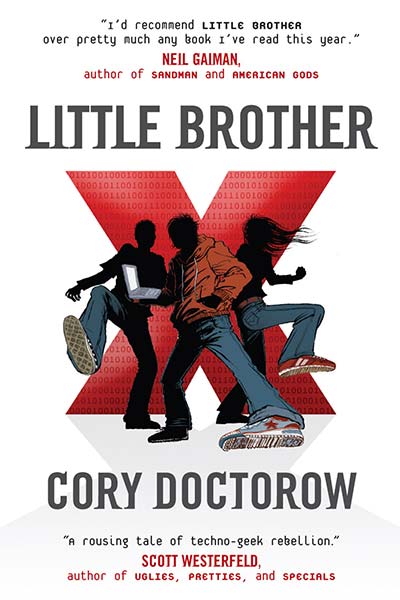
I’ve been waiting to announce this for months now, while the paperwork went back and forth and now I finally can! Don Murphy, producer of such films as Natural Born Killers and From Hell, has bought a film option on Little Brother. I’ve talked it over with Don and feel confident that if he makes the movie that he’ll do it justice — I’m guaranteed a spot as a consultant to ensure that it all comes out right, too!
For the uninitiated, a film option gives a producer the exclusive right to try to sell the film to a studio, signing up actors, a director and writer, and so on. For every film produced, many are optioned. But all that said, every film that gets made starts out as an option deal. Bottom line: a Little Brother movie isn’t a lock, but it’s a lot more likely than it was yesterday.
I’ve been waiting to announce this for months now, while the paperwork went back and forth and now I finally can! Don Murphy, producer of such films as Natural Born Killers and From Hell, has bought a film option on Little Brother. I’ve talked it over with Don and feel confident that if he makes the movie that he’ll do it justice — I’m guaranteed a spot as a consultant to ensure that it all comes out right, too!
For the uninitiated, a film option gives a producer the exclusive right to try to sell the film to a studio, signing up actors, a director and writer, and so on. For every film produced, many are optioned. But all that said, every film that gets made starts out as an option deal. Bottom line: a Little Brother movie isn’t a lock, but it’s a lot more likely than it was yesterday.
Love this short video review of Little Brother from Rebecca on Five Awesome YA Fans!


Chicago’s Griffin Theatre has mounted a live production of my young adult novel Little Brother, adapted by William Massolia. This is incredibly exciting; Time Out Chicago gave it four stars, saying, “Doctorow raises many worthy points about the relationship between our safeties and our freedoms, and in Milne’s bracing production, newcomer Mike Harvey as Marcus makes a confident tour guide.” Bill Shunn, writing in Sci-Fi Wire, said, “Little Brother is an exciting and thought-provoking production, imaginatively staged on a bare-bones set with some multimedia elements stirred in.”
I’ve managed to wrangle a trip to Chicago to see the play on July 9 — I hope to see you there! And if July 9 doesn’t work for you, I hope you can catch it on another night.
LITTLE BROTHER: Griffin Theatre, Chicago
Sci Fi Wire: Review: Cory Doctorow’s revolutionary novel Little Brother comes to the stage
Chicago Sun-Times: ‘Little Brother’ tackles big issues
Chicago’s Griffin Theatre has mounted a live production of my young adult novel Little Brother, adapted by William Massolia. This is incredibly exciting; Time Out Chicago gave it four stars, saying, “Doctorow raises many worthy points about the relationship between our safeties and our freedoms, and in Milne’s bracing production, newcomer Mike Harvey as Marcus makes a confident tour guide.” Bill Shunn, writing in Sci-Fi Wire, said, “Little Brother is an exciting and thought-provoking production, imaginatively staged on a bare-bones set with some multimedia elements stirred in.”
I’ve managed to wrangle a trip to Chicago to see the play on July 9 — I hope to see you there! And if July 9 doesn’t work for you, I hope you can catch it on another night.
LITTLE BROTHER: Griffin Theatre, Chicago
Sci Fi Wire: Review: Cory Doctorow’s revolutionary novel Little Brother comes to the stage
Chicago Sun-Times: ‘Little Brother’ tackles big issues