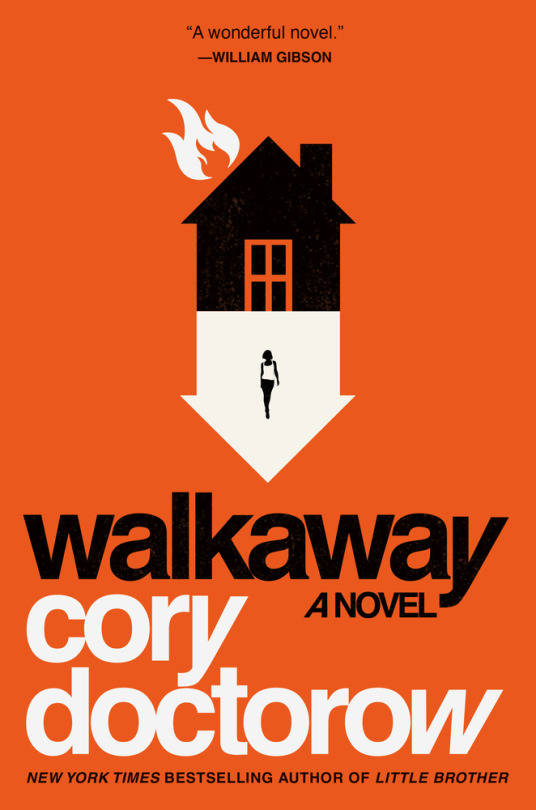
I’ve got an editorial in this month’s Wired magazine about the relationship between the science fiction stories we read and our real-world responses to disasters: Disasters Don’t Have to End in Dystopias; it’s occasioned by the upcoming publication of my “optimistic disaster novel” Walkaway (pre-order signed copies: US/UK; read excerpts: Chapter 1, Chapter 2; US/Canada tour schedule).
more

My latest Guardian column, Allow Clean Reader to swap ‘bad’ words in books – it’s a matter of free speech expands on last week’s editorial about the controversial ebook reader, which lets readers mangle the books they read by programatically swapping swear-words for milder alternatives.
more

I’ve got a new Guardian column, Internet-era politics means safe seats are a thing of the past, which analyzes the trajectory of Internet-fuelled election campaigning since Howard Dean, and takes hope in the launch of I’ll Vote Green If You Do.
The Obama campaigns went further. Building on the Dean campaign, two successive Obama campaigns raised millions in small-money donations, creating purpose-built Facebook-like social networks and using them to recruit highly connected supporters to work their way through their social graphs, contacting friends and friends-of-friends to pitch them on donating and voting.
But both times, Obama took office and immediately shut down these grassroots networks. The Obama governance style is big on closed-door, back-room horse-trading – Obama came out of Chicago Democratic Machine politics, after all – and this is fundamentally incompatible with having a bunch of true believers running around waving the flag, making categorical statements about which compromises are (and are not) acceptable.
Governing in tandem with a grassroots is a hard problem. The best example we have of this is the Tea Party, which, despite the big-money backers who bankrolled it, is composed of people who are genuinely passionate about politics and are serious about insisting that the politicians they backed act in accord with their principles.
Leaving aside my political differences with the Tea Party, it’s fair to say that this has been a mixed bag for Republican lawmakers, whose caucus has been responsible for a congressional deadlock that’s run on for years, so that it’s become normal for vital US governmental agencies to shut down and send everyone home until a budget can be passed.
Internet-era politics means safe seats are a thing of the past [The Guardian]

I was on American Public Media’s Marketplace yesterday talking (MP3) about our posting of a rarer-than-rare Disney treasure, the never-before-seen original prospectus for Disneyland, scanned before it was sold to noted jerkface Glenn Beck, who has squirreled it away in his private Scrooge McDuck vault.
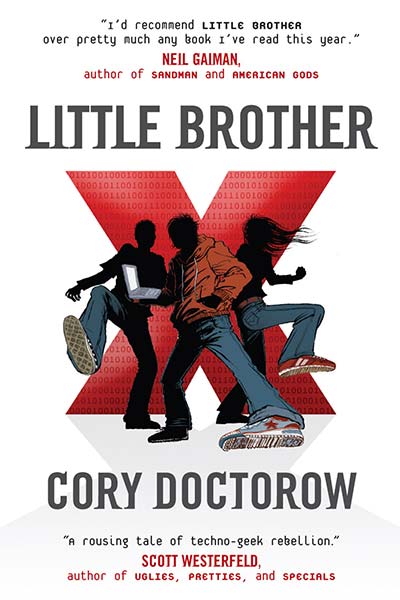
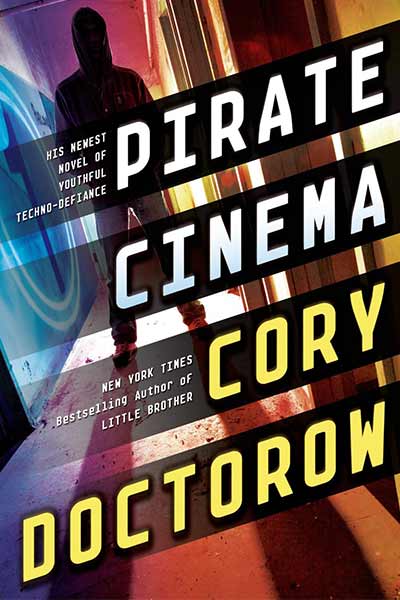
I could not be happier to announce that my novel Pirate Cinema has won the Libertarian Science Fiction Society’s Prometheus Award, along with Neal Stephenson’s Cryptonomicon. I won the Prometheus in 2008 for my novel Little Brother, and it’s among my proudest honors. My sincere thanks to the judges and the members of the society for this honor.
My novel Pirate Cinema has been shortlisted for this year’s Sunburst Award, a juried prize for the best in Canadian science fiction. It’s up in the Young Adult category, and is part of an exciting slate that is full of exciting books that deserve your attention.

The UK edition of my novel Pirate Cinema hits stores officially today! Tell your friends!
When Trent McCauley’s obsession for making movies by reassembling footage from popular films causes his home s internet to be cut off, it nearly destroys his family. Shamed, Trent runs away to London. A new bill threatens to criminalize even harmless internet creativity. Things look bad, but the powers-that-be haven’t entirely reckoned with the power of a gripping movie to change people’s minds…