/ / News

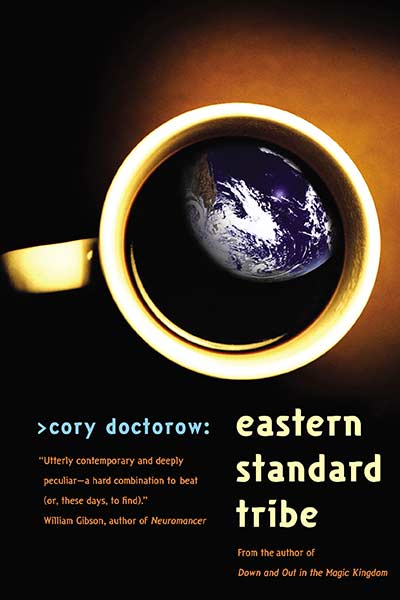
The German magazine Spex just published an interview with me, conducted while I was there in February touring with the German edition of Eastern Standard Tribe.

Jede technologische Entwicklung in der Geschichte der Menschheit hat Gewinner und Verlierer produziert. Als es noch keine Radios und Grammophone gab, war für einen Künstler Charisma, die Bühnenpräsenz, das Wichtigste – die Eigenschaft, die ihn erfolgreich werden ließ. Radio und Schallplatte relativierten die Wichtigkeit der charismatischen Bühnenpersönlichkeit, wichtiger wurde die Virtuosität im Studio – die Fähigkeit, seine Stimme oder sein Instrument im Moment der Aufnahme perfekt zu beherrschen! Es gefiel einer Menge Künstler nicht, dass sie ein Produkt einspielten, eine Konserve, die anschließend jemand anders dem Publikum lieferte – diese Künstler mussten sich bald neue Jobs suchen… Wer sich als Autor zu fein ist, Lesungen zu geben, Vorträge zu halten und für Magazine zu schreiben, hat in der heutigen Zeit verloren. Technologie tut Gutes und Böses, und die Frage ist nicht, ob die Helden und Gewinner von Gestern die Helden und Gewinner von Morgen sein werden. Die wichtige Frage ist vielmehr: Wird einer größeren Anzahl von Menschen die Möglichkeit gegeben, an Bildung und Kultur teilzuhaben?

Link

/ / News

The finalists for Canada’s Aurora Awards for the best science fiction of the year have been announced, and I’m delighted to note that Tesseracts Eleven, the anthology I co-edited with Holly Phillips, is a finalist for Best Work in English (Other)!


Best Long-Form Work in English:
As Fate Decrees by Denysé Bridger (published by EDGE Publishing)
New Moon’s Arms by Nalo Hopkinson (Grand Central Publishing)
The Moon Under Her Feet by Derwin Mak (Windstorm Creative)
Rollback by Robert J. Sawyer (Tor/Analog)
Cry Wolf by Edo van Belkom (McClelland & Stewart)

Link

See also: Tesseracts 11 Canadian sf anthology launch in Toronto this Sat

/ / News

I’m featured in the April 1 ish of Locus Magazine:

In a widely anticipated move, blogger and sf writer Cory Doctorow today announced that he is making himself available for download under a Creative Commons license. The download, which will be available from midnight on Tuesday, will be for a wide range of non-DRM platforms.

In a webchat announcing the plans, Doctorow downplayed suggestions that the download would reduce demand for people wanting to meet him in person: “My bet is that the Ubiquitous Cory will be the best promotional tool I’ve ever had.”

The downloaded Doctorow also includes a laptop, MP3 player, and a range of eight Copyfight/EFF T-shirts.

Link

/ / News

My latest Thinkernet column is live: “The Pleasures of Uninterrupted Communication,” about the difference between technologies that let us do a lot of things at once and those that interrupt us over and over again:

The mature information worker is someone who can manage his queues effectively, prioritizing and re-prioritizing as new items crop up, doing the fast-context-switching necessary to respond to an email while waiting for a file to download or a backup to complete. It’s a little like spinning plates, and when you get the rhythm of it, it can be glorious. There’s a zone you slip into, a zone where everything gets done, one thing after another clicking into place.

But once you add an interruptive medium like IM, unscheduled calls, or pop-up notifiers of mail, flow turns into chop. The buzz, blip, and snap of a thousand alerts turn plate-spinning into hell, as random firecrackers detonate over and over again, on every side of you, always there in your peripheral vision, blowing your capacity to manage your own queue as they rudely insert themselves into your attention.

Link

/ / News

I’m one of the guests of honor at this summer’s Pi Con, the annual science fiction convention held Aug 22-24 in West Springfield, MA, appearing alongside of Randall Munroe, the creator of the brilliant geek webcomic XKCD. I’m really looking forward to this — I’ve never met Randall and I’m an ardent admirer of his work. Discount registration is open until May 31.


This year Pi-Con, the convention located in the belly button of the universe (or more specifically, The Pioneer Valley) is lucky enough to have both Cory Doctorow and Randall Munroe as guests of honor.

Pi-Con has a lot to offer. We have a gaming (both table top and electronic), panels of all types (including virtual and pool panels) and flavors (from hard science to gaming, web comics to polyamory, and quite possibly everything in between), and vendors to fit all your geeky needs.

Link

/ / News, Podcast

Here’s the first installment of a podcast reading of a new novella that I co-wrote with Hugo- and Nebula-nominee Benjamin Rosenbaum. The story’s a big, 32,000-word piece called “True Names” (in homage to Vernor Vinge’s famous story of the same name), and it involves the galactic wars between vast, post-Singularity intelligences that are competing to corner the universe’s supply of computation before the heat-death of the universe.

Ben and I will be reading the story in weekly installments, taking turns as our schedules allow. The reading is Creative Commons licensed — Attribution-ShareAlike-NonCommercial — and the story itself will be published this fall in Fast Forward 2, Lou Anders’ followup to his knockout 2007 anthology, Fast Forward (regular Boing Boing readers will remember Paul Di Filippo’s Wikiworld story from that volume). Lou’s given us permission to post the story’s text simultaneous with the book’s publication, under the same Creative Commons license.

I had a nearly illegal amount of fun working on this story with Ben, who is a gonzo comp-sci geek with a real flair for phrasing, and I hope you’ll enjoy hearing it as much as we enjoyed writing it!

MP3 Link

/ / News

Here’s my latest InformationWeek column: “17 Tips For Getting Bloggers To Write About You.” It’s a checklist of the stuff that keeps me — and many other bloggers — from posting about sites. There are companies and causes out there spending their time and money trying to get people to talk about them online, while shooting themselves in the foot by not having permalinks (duh), by resizing your browser window (duh), or by having “linking policies” that seek to set out the circumstances under which you can link to them.

Have a link. Seriously: if you want bloggers to link to you, you need to have something linkable. Your upcoming TV show, protest march, product or soccer tournament is literally unbloggable unless you put it on the Web somewhere first.
Have a permanent link. Don’t just change the front page of your site every time a new speaker for your speaker-series in announced. A blogger who links to the front page of your site today in a post about the upcoming address by Philo T Farnsworth, wants that link to stay good for in the future, and not point to the upcoming address by Paris Hilton when you change it next week. Put up a separate, permanently linkable page for everything you want to get blogged.

Have a link for everything. Don’t have a single page with ten items on it. Blogging a link to the top of your fifty-screen-long page with a blurb about something halfway down generates 200 e-mails from readers who can’t find the referenced item.

Use real links. Don’t have links with expiring session-keys that are no good if someone revisits the URL later. If a blogger can’t send the URL to a friend or put it on the Web, then that blogger can’t send people to go look at your stuff. Likewise, avoid the giant, 800-character gobbledegook URLs filled with junky alphabet-soup GUIDs — if it can’t be pasted into IRC without linebreaking, there’s some group of compulsive communicators who’ll be unable to get to it.

Link