/ / Little Brother, News

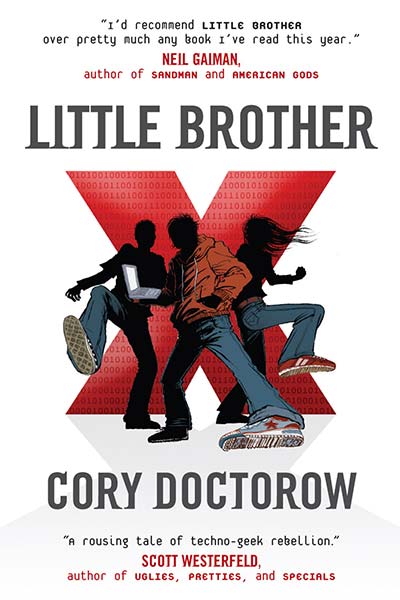
Here’s the latest Instructables HOWTO to tie in with my young adult novel Little Brother, which tells the story of young geeks who use technology to restore liberty to post-9/11 America.

This week, it’s HOWTO start a flashmob:


Timing is everything
This refers back to the whole participation thing. If your event is spontaneous in nature and just requires people to show up at the same time and do something goofy(say, gather at a subway stop and follow the first bearded person you see as if they were Jesus), they won’t need much time to prepare. The ideal time for this sort of event is at the end of the workday (between 5 and 6PM) during the week as a) the streets are more crowded and b)participants are more available. For whatever reason, Thursdays seem to be most effective.

If you are planning something more elaborate, like a Costumed Rampage, you want to give people at least a week to prepare, and preferably two. These events are most effective in heavily populated shopping and tourist areas, so Saturday afternoons work best. Note: these often turn into drunkfests.

Link

/ / Little Brother, News

My next novel, Little Brother, is coming out in a couple weeks — it’s a young adult novel about hackers who use technology to challenge authority. The folks from Instructables saw an early copy of the book and were really inspired by all the ingenuity demonstrated by the book’s heroes, so they’ve made a series of HOWTOs in the voice of M1k3y, the techno-guerrilla who tells the story in Little Brother.

The first one has just gone live: Photo-Emulsion Screen Printing, a HOWTO for making t-shirts for your movement’s wardrobe needs.

The general idea: After stretching fine-mesh cloth over a wooden frame, you spread a thin layer of photosensitive emulsion on the screen and let it dry. You then take a black image on transparent or translucent surface, place it against the screen, and then expose the screen to light. The light causes the emulsion to harden and bind to the fabric. Where the light strikes the screen, the emulsion will bind, making a solid layer. Where the light is blocked (ie where your black image is placed) the emulsion remains water-soluble. After exposing the screen, you spray down the screen with water, washing off the emulsion only where your image was placed; this clear area is where ink will be pressed through the screen when you print. Finally, you lay the screen on your t-shirt, other fabric, or paper, spread ink on the inside of the screen, and press the ink through the screen. If you use textile ink, you can heat-set the ink after it dries, and it’ll be permanent and washable.

Link, Link to RSS feed for Little Brother Instructables

/ / News

My next novel, Little Brother, is coming out in a couple weeks — it’s a young adult novel about hackers who use technology to challenge authority. The folks from Instructables saw an early copy of the book and were really inspired by all the ingenuity demonstrated by the book’s heroes, so they’ve made a series of HOWTOs in the voice of M1k3y, the techno-guerrilla who tells the story in Little Brother.

The first one has just gone live: Photo-Emulsion Screen Printing, a HOWTO for making t-shirts for your movement’s wardrobe needs.

The general idea: After stretching fine-mesh cloth over a wooden frame, you spread a thin layer of photosensitive emulsion on the screen and let it dry. You then take a black image on transparent or translucent surface, place it against the screen, and then expose the screen to light. The light causes the emulsion to harden and bind to the fabric. Where the light strikes the screen, the emulsion will bind, making a solid layer. Where the light is blocked (ie where your black image is placed) the emulsion remains water-soluble. After exposing the screen, you spray down the screen with water, washing off the emulsion only where your image was placed; this clear area is where ink will be pressed through the screen when you print. Finally, you lay the screen on your t-shirt, other fabric, or paper, spread ink on the inside of the screen, and press the ink through the screen. If you use textile ink, you can heat-set the ink after it dries, and it’ll be permanent and washable.

Link, Link to RSS feed for Little Brother Instructables

/ / News


The Toronto Public Library system is just kicking off a gigantic, ambitious speculative reading series that starts next Monday with Michael Skeet hosting a panel discussion with Karl Schroeder, James Alan Gardner and Peter Watts on the pursuit of foresight in Canadian science fiction.

On May 1, Toronto Public Library be launching my next novel, Little Brother, at an event at the Merril Collection, the astounding public science fiction reference library. Books will be on sale through BakkaPhoenix books, and they’re taking pre-orders for signed/inscribed copies of the book to be mailed out to you (CDN$19.95 for the book, plus $9 and GST for shipping in Canada, $15 to the US, $20 to Europe, and $25 to the rest of the world). BakkaPhoenix: 416 963 9993, inquiries@bakkaphoenixbooks.com

(Patient US readers who don’t mind waiting until the end of May for their signed, inscribed copies can request them from San Francisco’s Borderlands Books, who are not charging for domestic shipping. Borderlands: 888.893.4008, webmail@borderlands-books.com.)

Link


/ / News


The Starry Rift, a new anthology of kids-oriented science fiction, comes out today. It’s edited by Jonathan Strahan, and includes fiction by Neil Gaiman, Steven Baxter, Greg Egan, Jeffrey Ford, Gwyneth Jones, Kathleen Goonan, Ian McDonald, Kelly Link, Scott Westerfeld, Garth Nix, Walter Jon Williams and others — including me (with my story Anda’s Game).

The editor, Jonathan Strahan, did a fantastic job in pulling this together, and it couldn’t come at a better time. Kids’ literature is peaking right now, and a high-quality anthology that introduces young people to authors they can plunge into for books and books and books is a timely and great idea.

Jonathan’s giving away five copies of The Starry Rift to the first five young readers who write to him and name the last sf novel they loved and why.

Link, Buy it on Amazon


/ / News

The German magazine Spex just published an interview with me, conducted while I was there in February touring with the German edition of Eastern Standard Tribe.

Jede technologische Entwicklung in der Geschichte der Menschheit hat Gewinner und Verlierer produziert. Als es noch keine Radios und Grammophone gab, war für einen Künstler Charisma, die Bühnenpräsenz, das Wichtigste – die Eigenschaft, die ihn erfolgreich werden ließ. Radio und Schallplatte relativierten die Wichtigkeit der charismatischen Bühnenpersönlichkeit, wichtiger wurde die Virtuosität im Studio – die Fähigkeit, seine Stimme oder sein Instrument im Moment der Aufnahme perfekt zu beherrschen! Es gefiel einer Menge Künstler nicht, dass sie ein Produkt einspielten, eine Konserve, die anschließend jemand anders dem Publikum lieferte – diese Künstler mussten sich bald neue Jobs suchen… Wer sich als Autor zu fein ist, Lesungen zu geben, Vorträge zu halten und für Magazine zu schreiben, hat in der heutigen Zeit verloren. Technologie tut Gutes und Böses, und die Frage ist nicht, ob die Helden und Gewinner von Gestern die Helden und Gewinner von Morgen sein werden. Die wichtige Frage ist vielmehr: Wird einer größeren Anzahl von Menschen die Möglichkeit gegeben, an Bildung und Kultur teilzuhaben?

Link