/ / News

I’m speaking at London’s Battle of Ideas this Saturday, Oct 31, on a panel called “Rethinking Privacy in an age of Disclosure and Sharing.” The event goes 1:30-3:30 and there are still a few tickets left!

The increasing reach of information technology into all areas of life, from social networking websites to data sharing in public services, has thrown up a number of questions about privacy. Information about our medical records, financial circumstances and shopping habits is increasingly likely to be stored in electronic media that are out of our control. Some critics worry more about Tesco’s data-gathering than any ‘surveillance state’. The controversy about Google Maps’ Street View function, which captured thousands of unwitting people walking or standing on the streets, is a reminder that new technology constantly raises new questions about our privacy. So how worried should we be? Does the convenience of easily accessed information outweigh the danger of abuse? How are our conceptions of privacy changing? And following the success of the Pirate Party in Sweden, can we expect privacy to move up the political agenda in the UK too.

Rethinking Privacy in an age of Disclosure and Sharing

/ / News


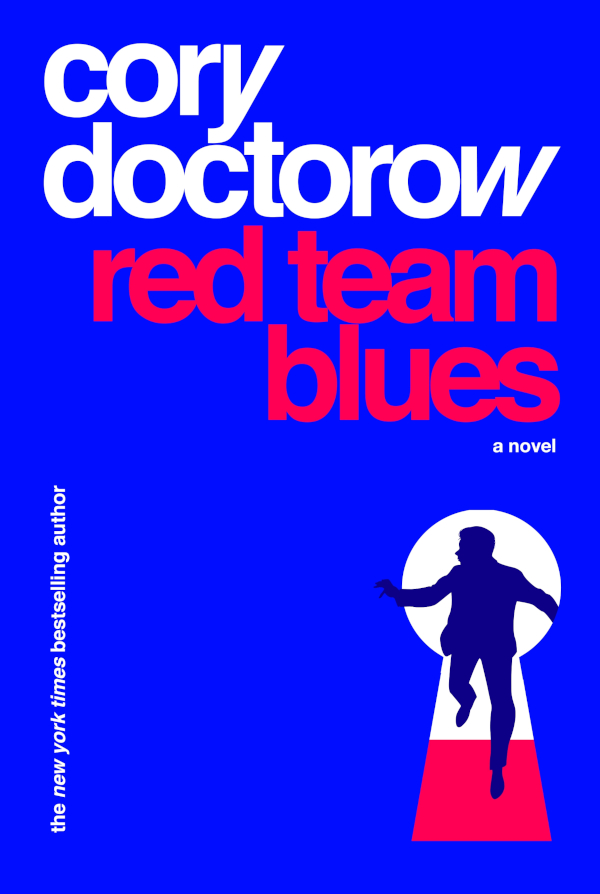
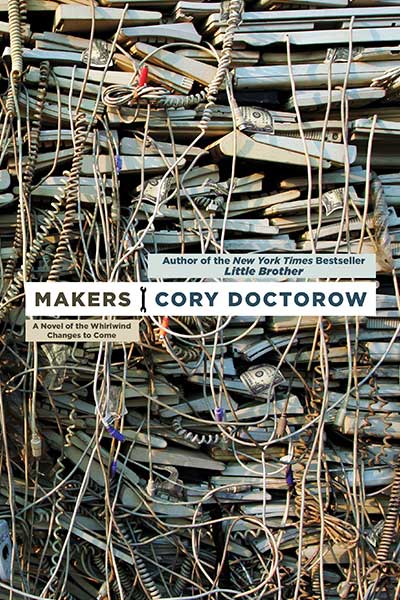
Today is the launch of my new novel, Makers, a book about people who hack hardware, business-models, and living arrangements to discover ways of staying alive and happy even when the economy is falling down the toilet. Weirdly, I wrote it years before the current econopocalypse, as a parable about the amazing blossoming of creativity and energy that I saw in Silicon Valley after the dotcom crash, after all the money dried up.

As with all my previous novels, the whole book is available as a free, Creative Commons download, under a NonCommercial-ShareAlike license that allows you to remix it to your heart’s content and share the book and your mixes noncommercially. And as with my last two books, I’ve created a unique donations program that connects generous people with schools, universities, libraries, shelters, prisons and other cash-strapped institutions.

Here’s how it works: this page has instructions for profs, librarians and similar worthies to list themselves as potential recipients for Makers (please pass this URL around to people who might want a copy!). If you’ve read the electronic text of Makers and want to reimburse me, but don’t want a copy of the print book for yourself, you can buy a copy for the institution of your choice. Everybody wins: you get to settle your karma while supporting your favorite bookseller, a library or university gets a copy of the book without having to divert its budget, my publisher gets the sale and I get the royalty and the sales-figure. I’ve facilitated the donation of hundreds of books this way, and it works great.

I’m launching Makers in the UK at Forbidden Planet in London tomorrow (Thursday) night at 6PM, and I’ll be having the Toronto launch with Bakka Books at the Merril Collection on November 12. You can pre-order inscribed copies from either event, and they’ll be shipped after I sign. (There’s also a great indie bookseller near my office in London, Clerkenwell Tales, which will take your inscription mail-orders; I’ll stop in a couple times a week to sign them for the duration).

There’s also a US east-coast tour with stops in NYC, New Jersey, Boston and Philly, but the details are still being finalized. If you think you can make it to any of those places and want to get an email once the details are fixed, drop me an email and I’ll send you a note once I have them in hand.

Let’s see, what else? Oh yeah, this kick-ass Publishers Weekly starred review:

In this tour de force, Doctorow (Little Brother) uses the contradictions of two overused SF themes—the decline and fall of America and the boundless optimism of open source/hacker culture—to draw one of the most brilliant reimaginings of the near future since cyberpunk wore out its mirror shades. Perry Gibbons and Lester Banks, typical brilliant geeks in a garage, are trash-hackers who find inspiration in the growing pile of technical junk. Attracting the attention of suits and smart reporter Suzanne Church, the duo soon get involved with cheap and easy 3D printing, a cure for obesity and crowd-sourced theme parks. The result is bitingly realistic and miraculously avoids cliché or predictability. While dates and details occasionally contradict one another, Doctorow’s combination of business strategy, brilliant product ideas and laugh-out-loud moments of insight will keep readers powering through this quick-moving tale.

Mighty is my w00t!

Makers

/ / News

Here’s the full text of the Writers’ Digest interview that was on the cover of last month’s issue:

YOU’VE SAID YOU LEARNED AT THE CLARION SCIENCE FICTION & FANTASY WRITERS’ WORKSHOP HOW TO SIT DOWN AT THE KEYBOARD AND “OPEN A VEIN.” HOW DID THAT CHANGE YOUR WRITING?

That’s a variation on a famous old writing aphorism, something like: “Writing is easy—all you have to do is sit down at your typewriter and open a vein.” I was 21 when I went to Clarion. Before, when I would sit down at a keyboard, I would feel “the magic”—that feeling that you’re putting down words that are entertaining and witty and sometimes very vivid. I would feel the cleverness—that feeling you get if you happen to be the guy who tells the funniest joke in the room at the lull in the conversation. Everybody laughs and for a moment you kind of bask in their adulation.

But what I didn’t feel was that kind of heart-tugging feeling—that feeling you get when you’re in dangerous territory. The feeling I had before was the feeling of having successfully told a joke; the feeling I try to get now is that feeling you get just before you try the joke, when you don’t know if it will succeed. That feeling of trepidation, of being slightly out of control, of taking a risk, of not knowing whether you are going to crash and burn—that feeling.

/ / Makers, News

I’m launching the book in the UK at Forbidden Planet London on October 29.

I’m also doing a Canadian launch at The Merril Collection in Toronto on November 12 (7pm, The Merril Collection of Science Fiction, Speculation, and Fantasy, 239 College Street, 3rd Floor, Toronto, Ontario M5T 1R5, +1 416 393-7748), with books on sale from Bakka Books (you can pre-order signed copies from them if you can’t make it).

There isn’t a US launch per se, but I’ll be doing a short US tour with stops in NYC, NJ, Boston and Philly, and I hope to see you at one of those dates!

/ / Makers, News

Clerkenwell Tales is a great, new independent bookstore located just a few blocks from my office in London. Peter, the owner, has graciously agreed to accept orders for signed, inscribed copies of Makers. Just email or phone (+44 20 771 38135) him and tell him how many copies you’d like and what you’d like inscribed on them, and I’ll drop by once or twice a week (less often if I’m out of town!) and sign all the orders.

For North Americans, I’ll be doing a book launch in Toronto with Bakka Books and the Merril Collection library on (Nov 12, 7pm, The Merril Collection of Science Fiction, Speculation, and Fantasy, 239 College Street, 3rd Floor, Toronto, Ontario M5T 1R5, +1 416 393-7748), and they’re glad to take orders for inscribed copies beforehand. I’ll sign them all for shipping on the day.

/ / Makers, News

Kevin Carson at the P2P Foundation has a great economics-centric review of Makers that really gets into some of the interesting questions raised by the book:

Taken all together, it sounds like an example of what Paul Goodman called “comfortable poverty”: traditional monetary metrics of standard of living, in a time of imploding costs, have limited relevance. The main drawbacks are the uncertainty of property titles (a familiar theme from Hernando de Soto), and the undeveloped social support networks. The lack of adequate healthcare ranks high as an example of the latter concern. But with garage microfactories capable of churning out syringes and IV pumps, and plenty of underemployed MDs at a time when employer-based health insurance (in Doctorow’s scenario) is likely collapsing like a house of cards, the idea of a revived system of “lodge practice,” with decent quality cooperative clinics and even operating theaters run out of storefronts for credit on the shantytown barter network, seems quite plausible.

In their early days the towns of medieval Europe, growing up outside the feudal structure, probably had a flavor something like this. As old villages at strategically situated crossroads and fords began to swell with runaway serfs, and artisans setting up in business for themselves to service the revived commerce, they found themselves in an irregular legal status vis-a-vis the feudal lords in whose territories their town walls technically lay. By building walls and raising militias, federating together, and appealing to the new central governments’ interest in promoting commerce, they were able to compel de jure recognition via royal charters. But state recognition followed from their prior demonstration, on their own, that they were the building blocks of the new society. In fact, until the introduction of artillery capable of battering down town walls, recognition of royal sovereignty by leagues of free towns became very nearly pro forma. That’s the way I learned it from Kropotkin, anyway.

/ / News

My latest Guardian column, “Corporate bullying on the net must be resisted,” describes the way that copyright “self-help” measures that let rightsholders force ISPs to take action against infringement without court oversight are rife with abuse. The UK is one of many countries presently considering a law allowing record and movie companies to take whole households off the Internet if one member is accused — without proof — of breaking copyright three times.

It is the norm for ISPs to remove anything and everything on receipt of a legal notice. A group of Oxford internet researchers tried an experiment with this a few years ago, posting copies of John Stuart Mill’s 1869 On Liberty on a variety of European ISPs’ servers, and then sending notices to the ISPs purporting to come from Mill’s copyright holders (Mill’s copyrights are nonexistent, having returned to the public domain more than a century ago) and demanding that On Liberty be taken down. All but one of the ISPs in the study complied.

And why not? For a free hosting service such as Blogspot or YouTube or Flickr or Scribd, the lifetime profit from a given customer is likely exceeded by the cost of one call to a solicitor asking for advice on a takedown notice. Even paid services operate on such razor-thin margins that they’re unlikely to seek legal advice in the face of most threats.

So, the notice-and-takedown system – a feature of copyright law the world round, thanks to the World Intellectual Property Organization (WIPO) treaties that require it – has become an easily abused, cheap, and virtually risk-free way of effecting mass censorship on the flimsiest pretence. Everyone from the Church of Scientology to major fashion companies avail themselves of this convenient system for making critics vanish.


Corporate bullying on the net must be resisted

/ / News


Jonathan Worth is a talented commercial photographer (he shot me for a feature in Popular Science a few years back) who was recently asked for his shots by the National Portrait Gallery in London, and asked if he could come and take my pic for it, offering to give me the right to use the resulting print for publicity, book jackets and so on.

The National Portrait Gallery’s crazy copyright stance sparked an interesting conversation about copyright with Jonathan (who also shot some killer photos!) and in the end, he agreed to license the photos he took of me for the exhibition under a very liberal Creative Commons Attribution-ShareAlike license, one of the most liberal licenses, allowing for both commercial uses and remixes.


One of Jonathan’s pictures showed me in my office, and I went a little Flickr-crazy marking up the photo with notes explaining what everything was. I tweeted the photo, and lots of people came by to see it — several thousand, some of whom ended up offering Jonathan paying work. It was a win all around.

This got us to talking about how producers of images and other works that are well-known digitally can use that familiarity to sell physical objects (I give away my books as ebooks to sell the print books), and Jonathan decided to try an experiment, producing 111 prints of the iconic image (without the Flickr notes!). I kicked in the 111-page initial manuscript printing of my forthcoming (April 2010) young adult novel For the Win, which I had just finished a week before. I had printed ten copies of the manuscript to pass around, and I had one copy left, and so I signed every page and handed it off to Jonathan.


Jonathan is selling his prints on a sliding scale depending on which manuscript page you get with it — high numbers are cheaper — and the one-of-a-kind super-premium offering is page one accompanied by a 100cm x 140cm special edition print that include the contact-sheets from the shoot (proceeds from this go to a local school raising money for new buildings).

I think that this is just too cool for words. Jonathan’s a professional shooter who’s also an artist, and the portrait shots are fantastic enough. But he’s also experimenting with new business-models for photography that leverage, rather than fight, the Internet. I don’t receive any of the money from this — Jonathan did the work and sank in the capital, so it’s his reward to reap.

Etsy: Photographs by Jonathan Worth

Blog: Giving things away Pt II

/ / News, With a Little Help

Publisher’s Weekly just announced (on the cover, no less!) my forthcoming DIY short-story collection, With a Little Help, a print-on-demand book that explores pretty much every “freemium” model for turning a free, well-known digital object into a bunch of highly sought and profitable physical objects. There’s four different covers on the print book, a hand-bound limited hardcover whose end-papers come from the paper ephemera of various writer-friends; a free audiobook read aloud by voice actor/writers and a for-pay CD-on-demand of the same thing; a donation campaign, and even a one-of-a-kind super-premium chance to commission a new story for the book for $10,000. All the financials for the book will be disclosed online and bound into the books on a monthly basis.

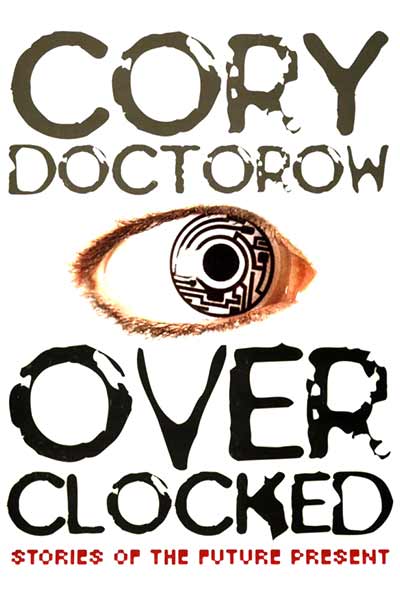
Here’s the pitch: the book is called With a Little Help. It’s a short story collection, and like my last two collections, it’s a book of reprints from various magazines and other places (with one exception, more about which later). Like my other collections, it will be available for free on the day it is released. And like my last collection, Overclocked, it won’t have a traditional publisher.

Let me explain that last part: Overclocked was published in January 2007, just weeks after Advanced Marketing Services, the parent company of Publishers Group West, which distributed Thunder’s Mouth, the publisher for Overclocked—went bankrupt. You remember Advanced Marketing Services. What a mess. First, a senior executive was arrested and convicted of fraud for falsifying the company’s earnings, then the company tanked, and the resulting whirlpool threatened to suck half of New York publishing down with it. As a result, Thunder’s Mouth went though a series of mergers and acquisitions. My editor and then his replacement both left or were let go (I never found out which). By spring, no one was communicating with me.

Later that year, I did a kind of self-financed minitour, piggybacking on speaking gigs, and every time I went into a bookstore it seemed like I was seeing another edition of the book with a different publisher’s name on the spine. The book’s currently listed in Perseus’s catalogue, for which I am glad. The royalty checks keep coming, and the book continues to do well, but I could no longer be said to have any particular relationship with this publisher. As far as I can tell, it is listing the book in its catalogue and filling orders, but not much else.

This makes Overclocked into a fine control for my little experiment. It is a good book. It sold well and was critically acclaimed. But it is solidly a midlist title, a short story collection published by a house turned upside down by bankruptcy. It will be the baseline against which I compare the earnings from With a Little Help. And those earnings will be diverse—like the musicians who’ve successfully self-produced albums in a variety of packages at a variety of price points (Radiohead, Trent Reznor, David Byrne and Brian Eno, Jonathan Coulton), I have set out to produce a book that can be had in a range of packages and at a range of price points from $0.00 to $10,000.

Doctorow’s Project: With a Little Help