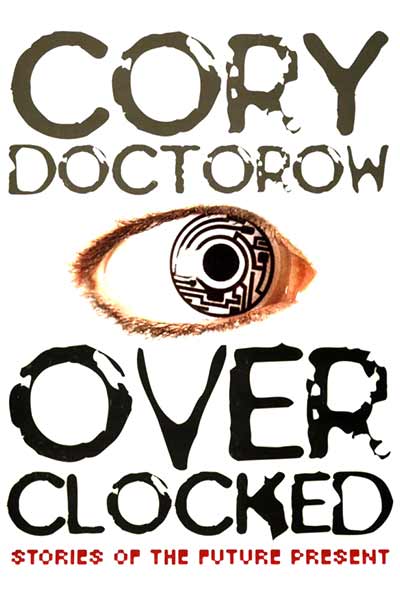
Here’s a podcast of my recent Locus column, The Internet of the Dead:
I had begun my trip with a few days in Toronto, attending to a strange and new kind of memorial ritual for a close friend who had died unexpectedly in June.
My friend’s name was Erik ‘‘Possum Man’’ Stewart, and I’d known him for decades, since we were high-school roommates. We were both geeks, but Possum was a true hacker, a talented and creative programmer who pursued numerous projects, including a lifelong effort to create spatial games like Pong and Tetris that ran in four or more dimensions. Like me, he was in his early forties, and he was in fine health, apart from an unsuspected weak blood vessel in his brain that ruptured without warning while he slept. When his housemates found him, his computer was still switched on and logged in, and his e-mail open, along with various windows with to-do lists and other random notes from one part of his busy mind to another.
Mastering by John Taylor Williams: wryneckstudio@gmail.com
John Taylor Williams is a audiovisual and multimedia producer based in Washington, DC and the co-host of the Living Proof Brew Cast. Hear him wax poetic over a pint or two of beer by visiting livingproofbrewcast.com. In his free time he makes “Beer Jewelry” and “Odd Musical Furniture.” He often “meditates while reading cookbooks.”