/ / Little Brother, News

In the run-up to last week’s benefit for the Comic Book Legal Defense Fund, Brian Heater of the Daily Crosshatch blog conducted a two part interview with me; he’s just posted part two.

Do you have this extended universe of fan fiction in mind when you work on these books?

No, not at all. It’s actually kind of interesting, I think. The way I approach the creative element of what I do and the critical element are almost completely separate. I sit down and write almost as a therapeutic exercise. When I’m finished writing for the day, I often don’t remember what I’ve written. I go back and review it, and I’m often surprised by it. I’ve written stories and novels and things that have taken me years and years to write and when I got to the ending, I didn’t like it and rethought it entirely and then rewrote the ending and then turned back to the first page, only to realize that I’d foreshadowed that ending, four years before, but hadn’t known until that day.

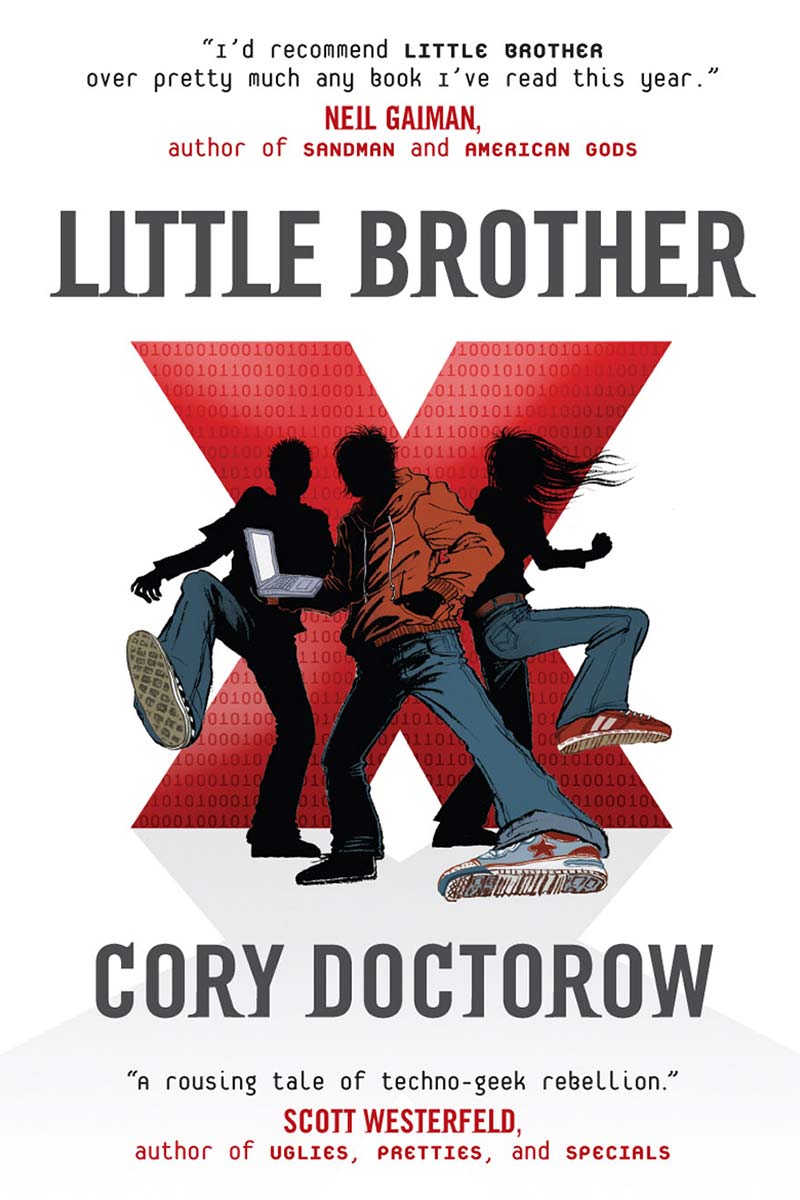
I have almost no premeditation on cultural-political things when I write. Even on a political book like Little Brother, it was actually an emotional reaction to a bunch of things that I was feeling in regard to the “war on terror.” I didn’t sit down and say, “what’s the best way to alarm children about surveillance?” I sat down and thought, “how can I artistically approach this subject in a way that I find the most aesthetically pleasing?”

But you are hoping that, once it’s out there, readers will adopt the work in creative ways.

Yeah, well, in the same way that there’s a compositional and editorial process, when you do anything creative, when I finish with the story, look at it, edit it, and prepare it for publication, and show it to my agent, and so on, I certainly do think of that at that stage. But the creative process, for me, is all about getting into a nice space and doing something totally creative that has almost no agenda aside from a creative one.

Part 1, Part 2

/ / Little Brother, News, Remixes


Chris sez, “I am also a member of the Cincinnati 2600 group. We get together once a month and listen to folks present on nifty things like SQL injections and packet sniffing. In early August we did lightning talks, which are little 5 minute presentations instead of the usualy 30-60 minute format. I gave 3 lightning talks that were inspired by Marcus’ exploits in Little Brother: running applications from a USB drive, using block encryption to safeguard data on a USB stick, and hiding your encrypted data in a deniable format in the event of capture and torture.

Click the links above to download Chris’s slides — this is just too damned cool!

/ / Little Brother, News

Christopher from Cubeecraft (purveyors of fine cubic papercraft people) was so impressed with the poster that Pablo Defendini made for my novel Little Brother that he whipped up this fantastic little papercraft feller based on it.

I love that Defendini poster — and this is the second awesome thing it’s inspired (the first was the Camerahead protest in Seattle against the CCTVs in public parks). It’s really turning into quite a little muse for a lot of peoples’ creativity.

Cubeecraft: Little Brother

/ / Little Brother, News

Back in May, we had to cancel a planned benefit for the Comic Book Legal Defense Fund in NYC due to illness striking one of the organizers. I promised then that I’d be rescheduling it for some time in August and now, here it is!

I’m really proud to have the chance to serve the CBLDF, which is a model for how an imaginative, vibrant civil liberties organization operates. They raise money to bail out comic creators and sellers (and others in the trade) who face legal persecution for making comic books.

Even better: this event includes DJ Spooky, whom I’ve wanted to meet since I wrote the intro to his new collection of essays on music, and afterwards, Spooky’s spinning a small-venue set, also to benefit the CBLDF.

I really hope to see you there — I’m coming into New York a day early (I’m on my way to 3Pi Con in Springfield, Mass, where I’m one of the guests of honor, along with Randall “XKCD” Munroe) and spending a bunch of dough out of pocket just to have the chance to do this for CBLDF. Tickets are limited — act now!


On August 21, Cory Doctorow, award-winning author and co-editor of the popular blog Boing Boing and experimental writer / artist / musician Paul Miller, a.k.a. D.J. Spooky That Subliminal Kid team up for a multimedia speaking event benefiting the Comic Book Legal Defense Fund. Following their respective presentations, Doctorow and DJ Spooky will take the stage together for an open forum discussion about their work and the futurepresent each eloquently addresses across different media.

Cory Doctorow will read and discuss the issues behind his bestselling young adult novel, Little Brother. Addressing internet and government security, censorship, and civil liberties in a post-9/11 near-future atmosphere, Little Brother tackles timely issues while telling a story that’s smart, funny, and jam-packed-with-pop culture nuggets. Doctorow “hopes it’ll inspire you to use technology to make yourself more free.” Doctorow is the former European Director of the Electronic Frontier Foundation, a civil liberties group that works to keep cyberspace free. IDW recently published Cory Doctorow’s Futuristic Tales of the Here and Now a collection of comics based on his cyberpunkiest Sci-fi short stories.

DJ Spooky joins Doctorow to present concepts from Sound Unbound: Sampling Digital Music and Culture, his new book / literary mixtape collecting writing by artists and thinkers including Brian Eno, Jonathan Lethem, Saul Williams, Steve Reich, Moby, Chuck D, and more.

Cory Doctorow Meets DJ Spooky: A CBLDF Benefit Mashup!

/ / Little Brother, News

Last spring I sat down for an interview with Steve Johnson at the Chicago Tribune to talk about Little Brother, copyright, civil liberties, blogging and pretty much everything else. We covered some different territory to the usual interview and it turned out well (I think!).

There’s this broad consensus that the Virginia Tech murders had something to do with violent video games. When you actually read the coroner’s inquest report, video games are mentioned twice. The first is his mother saying he never wanted to play those video games. The second is his roommate saying, “We always thought he was weird because he never wanted to play video games.” Yet it’s still a truism that violent video games must be responsible for Virginia Tech.

We have the capacity to surveil and control adolescents ion a way we’ve never done before. We chase them indoors and then we tell them that all the virtual places they might gather, we need to surveil them because of the ever-present threat of pedophiles and because of the ever-present need to market to them. We’ve really hemmed in adolescence in a way we never have before.

Link